The UAE Fuel Consumption Crisis: Why Every Dirham Counts in 2025
Fuel is a bigger problem in the UAE than most operators expect. Diesel was AED 2.67 a litre in November 2025, and petrol ranged from AED 2.44 to AED 2.63 according to Gulf News. By September 2026 diesel had climbed to AED 4.30. For UAE businesses, that puts fuel at 30-40% of total fleet operating costs.
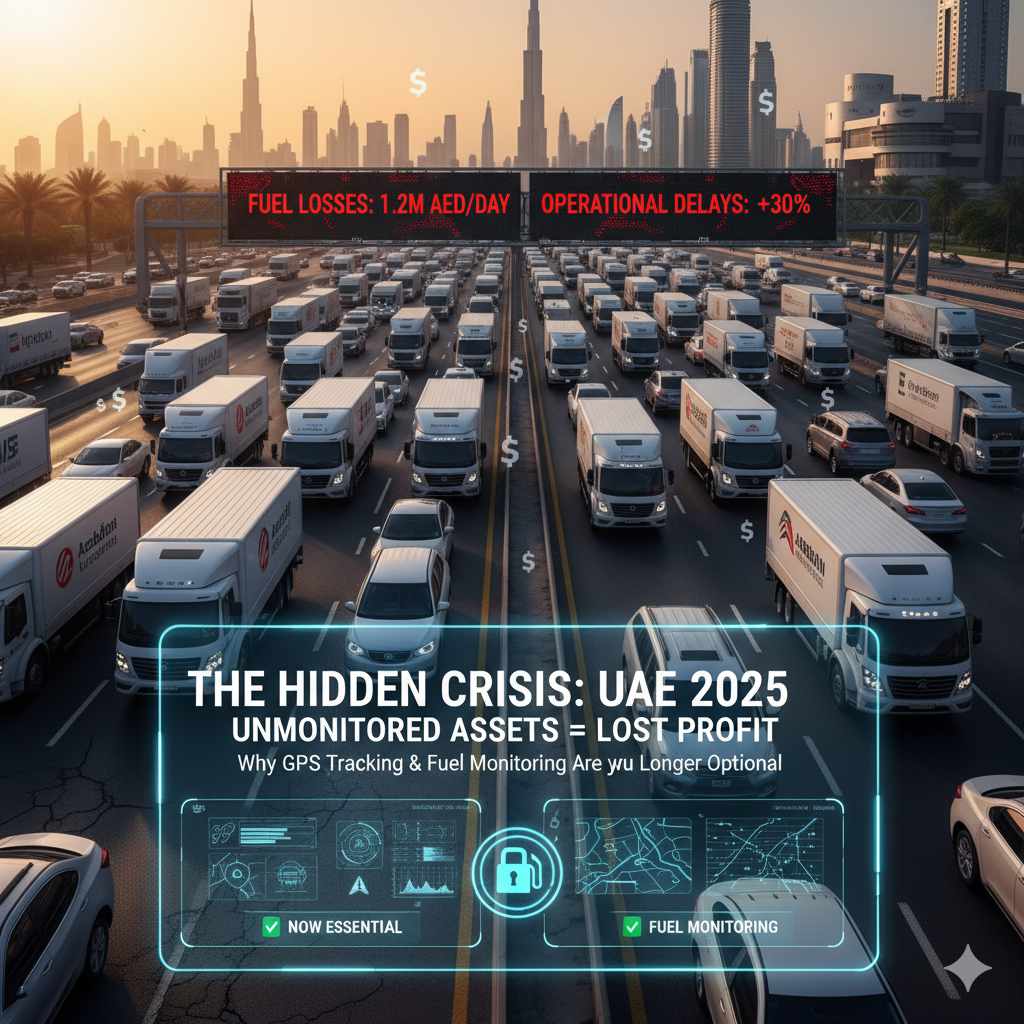
Congestion makes it worse. Gulf News reports that traffic congestion in Dubai costs the economy AED 771,147 per kilometre in fuel and time, and that Dubai loses AED 2.9 billion a year to wasted fuel and productivity.
In busy areas like Downtown Dubai, one vehicle can burn through AED 12,000 of fuel a year on congestion alone, and roughly 1.6 million litres are used every year just idling in traffic.
For a fleet operator, the numbers look like this:
- A 30-vehicle fleet spends AED 87,000-120,000 a month on fuel
- 15-30% of it goes on theft, waste and inefficiency
- That's AED 313,200-432,000 a year gone
- Without monitoring, you won't know where it went
This guide sets out the methods that cut fuel consumption by 20-35% in UAE conditions, using data from Dubai and Abu Dhabi fleets. It also explains how a modern fuel monitoring system turns fuel from a mystery cost into one you can control. If you're ready to compare and buy a system, read it alongside our Fuel Management System UAE: 2026 Buyer's Guide, which covers vendor selection, ROI modelling and rollout.
Understanding Fuel Consumption in UAE: The Unique Challenges
UAE's Extreme Operating Conditions
A few things about driving here push fuel use up in ways you don't see in most markets.
The heat is the obvious one. Summers pass 50°C, and the air conditioning runs all day, which adds 15-25% to fuel consumption on its own. The engine also works harder in extreme temperatures, the cooling system carries a heavier load, engine efficiency drops at high ambient temperatures, and some fuel is lost to evaporation.
Then there's congestion. As our GPS tracking challenges analysis shows, Dubai motorists lost 35 hours to traffic in 2024. That's 2 hours more than in 2023 and 45% more than in 2022. Traffic hits fuel hard:
- Stop-and-go driving raises consumption by 40-60%
- An idling vehicle burns 0.6-1.0 litres an hour
- Average traffic speeds fell from 35 mph in 2019 to 32 mph in 2024
- The last stretch into Downtown Dubai moves at just 22 mph during the morning commute
- 3.5 million vehicles are on Dubai's roads every day
Distances are long, too. The cities sprawl, commutes are long, and Abu Dhabi to Dubai is more than 140 km. Commuters between Sharjah and Dubai sit in congestion every day, and fleet vehicles often cover 200-500 km daily.
And there's how people drive. Hard acceleration is common, highway speeds of 120-140 km/h are normal, drivers change lanes often, the AC is always on and engines are left idling for long periods.
Average Fuel Consumption in UAE
According to The National, the UAE set a goal of raising average fuel efficiency to 20.8 kilometres per litre by 2028, from 12.1 km/L in 2013.
This is roughly where vehicles are today. For passenger cars:
- Fuel-efficient cars (Mitsubishi Mirage): 22.2 km/L (4.5 L/100km)
- Average sedans (Toyota Camry): 12-15 km/L (6.7-8.3 L/100km)
- SUVs (Toyota Land Cruiser): 8-10 km/L (10-12.5 L/100km)
- Luxury vehicles: 6-9 km/L (11-16.6 L/100km)
For commercial vehicles:
- Light delivery vans: 10-12 km/L (8.3-10 L/100km)
- Medium trucks: 6-8 km/L (12.5-16.6 L/100km)
- Heavy trucks: 3-5 km/L (20-33 L/100km)
- Buses: 4-6 km/L (16.6-25 L/100km)
Don't plan on the brochure figure. In Dubai traffic, fleets usually burn 30-40% more than the manufacturer's number. A vehicle rated at 15 km/L actually gets 10.5-12 km/L. One rated at 10 km/L gets 7-8 km/L, and one rated at 8 km/L gets 5.6-6.4 km/L.
The Hidden Costs: Where Fuel Money Disappears
1. Fuel Theft: The 15-30% Revenue Leak
Fuel theft is the largest hidden cost UAE fleet operators carry, and most companies have no idea it's happening until they install monitoring.
Siphoning is the classic method. Drivers drain fuel from the tank for their own vehicles or to sell on the black market, usually overnight or during long stops. Each incident takes 10-50 litres, which at AED 4.30 a litre is AED 43-215 a time.
False receipts are the paper version. Drivers claim for fuel they never bought, inflate the amount (buy 30 litres, claim 50), reuse old receipts or put in claims for fuel that went into a personal car. Each false receipt costs AED 50-200.
Fuel card fraud tends to cost the most per driver. Company cards get used for personal vehicles, cloned and shared, used to fill up friends' and family members' cars, or even sold to third parties. That runs to AED 500-2,000 a month per card.
Then there's unauthorised use: company vehicles taken out for personal trips at the weekend, 'rented out' to friends, or used for long personal errands during working hours. That can account for 20-40% of total fuel consumption.
The UAE numbers can be ugly. Picture a Dubai logistics fleet losing AED 28,000 a month to fuel theft alone, 21% of its fuel budget, or AED 336,000 a year. Or 7 drivers regularly filling their own cars on company fuel cards, at a cost of AED 18,500 a month.
Across the industry, the figures look like this:
- 15-30% of fleet fuel budgets are lost to theft
- The average loss per vehicle is AED 3,600-7,200 a year
- A 30-vehicle fleet loses AED 108,000-216,000 a year
- Fuel monitoring cuts theft by 90-95%
2. Excessive Idling: Burning Money While Parked
Idling quietly eats fuel all over the UAE, and Dubai's traffic makes it much worse.
This is how much an idling engine burns:
- Small cars: 0.6-0.8 litres an hour
- Medium vehicles: 0.8-1.0 litres an hour
- Large SUVs and trucks: 1.0-1.5 litres an hour
- With the AC on, which is normal here: another 20-30%
A lot of it happens in traffic. The Dubai morning rush on Sheikh Zayed Road and Al Khail Road, the Abu Dhabi Corniche at peak hours and the Sharjah-Dubai border crossings all add up, and the average vehicle spends 30-60 minutes a day idling in traffic.
More of it is down to habit. Drivers leave the engine running during deliveries (5-15 minutes each), take long lunch breaks with the AC on (30-60 minutes), keep it running while waiting for customers or appointments (15-45 minutes), and sit at depots without switching off. On average that's 1-2 hours of unnecessary idling per vehicle per day.
Work it through for one vehicle in a 30-vehicle fleet. Before monitoring, it idles for 2 hours a day. At 0.8 litres an hour that's 1.6 litres a day, or AED 6.88 at AED 4.30 a litre. Over 22 working days that's AED 151 a month, and AED 1,816 a year per vehicle.
Across 30 vehicles, idling wastes AED 4,541 a month and AED 54,490 a year.
GPS monitoring typically cuts idling by 40-60%. Idle time comes down to 0.8 hours a day, and the fleet saves AED 21,796-32,694 a year.
Industry reports say Dubai's best-performing fleets cut idle time by 40%, saving a great deal of fuel through GPS tracking and driver coaching. For the full 90-day plan, updated to 2026 fuel prices, see our guide to engine idling reduction and fuel savings for UAE fleets.
3. Inefficient Routes: Driving Extra Kilometers Daily
Without route optimisation, drivers often take longer, less efficient routes, and that burns fuel.
Poor planning is the first culprit. Drivers backtrack to stops they missed, run deliveries in a bad order, ignore traffic patterns and never optimise multi-stop routes. It adds 15-30% more kilometres.
Ignoring traffic is the second. Driving through known congestion, sticking to the usual route at peak hours, ignoring live traffic updates and running fixed routes whatever the conditions wastes 25-40% of fuel in stop-and-go traffic.
The third is personal detours: unauthorised stops for errands, long detours to favourite areas, route changes to stay out of sight of supervisors, and visits home during working hours. That can add 20-50 km a day per vehicle.
Take a 30-vehicle delivery fleet. Each vehicle drives an average of 100 km a day. With 25% route inefficiency, that's 25 km extra per vehicle and 750 extra kilometres across the fleet every day. At 12 km/L that's 62.5 litres wasted, or AED 269 a day at AED 4.30 a litre. Over 22 working days it comes to AED 5,913, and over a year AED 70,950.
GPS route optimisation improves route efficiency by 25-40%, which saves AED 17,738-28,380 a year.
Our fleet management solutions include AI-powered route optimisation that uses real-time traffic data for Dubai and Abu Dhabi.
4. Aggressive Driving: The Fuel Efficiency Killer
How people drive has a huge effect on fuel. Aggressive driving raises consumption by 25-40%.
Harsh acceleration is the most common habit: pulling away hard from stops, racing between traffic lights and merging aggressively onto highways. It adds 15-25% to fuel consumption.
Speed does even more damage. Driving at 120-140 km/h instead of 100 km/h costs far more than you'd think, because consumption climbs exponentially above 100 km/h and aerodynamic drag rises with the square of speed. At 140 km/h you'll burn 20-35% more than at 100 km/h.
Harsh braking adds 10-15%. Braking late and hard throws away momentum you could have kept, and it's usually a sign the driver isn't reading the road ahead.
High revs add 15-20%. That comes from driving in a lower gear than needed and, on manual gearboxes, not changing up promptly.
Studies put the gap between drivers in numbers:
- Aggressive drivers: 8-10 km/L on average
- Moderate drivers: 11-13 km/L on average
- Eco-conscious drivers: 14-16 km/L on average
- The difference: 40-60% better efficiency
For a 30-vehicle fleet, suppose aggressive driving pushes consumption up 30%. Normal fuel spend of AED 87,000 a month becomes AED 113,100. That's AED 26,100 extra a month, or AED 313,200 a year.
Driver behaviour monitoring changes that. GPS tracking shows you who the aggressive drivers are, coaching cuts incidents by 50-70%, fuel efficiency improves by 15-25%, and the fleet saves AED 78,300-156,600 a year.
Proven Strategies to Reduce Fuel Consumption in UAE
Strategy #1: Install GPS-Based Fuel Monitoring System
If you do one thing to cut fuel consumption, install a proper GPS fuel monitoring system. Nothing else comes close.
The hardware has four parts:
- A GPS tracker for real-time location, speed and route tracking
- A wireless fuel sensor that measures fuel level continuously (0.5-1% accuracy)
- Engine sensors that monitor ignition, RPM and diagnostic data
- A communication module that sends the data over the cellular network
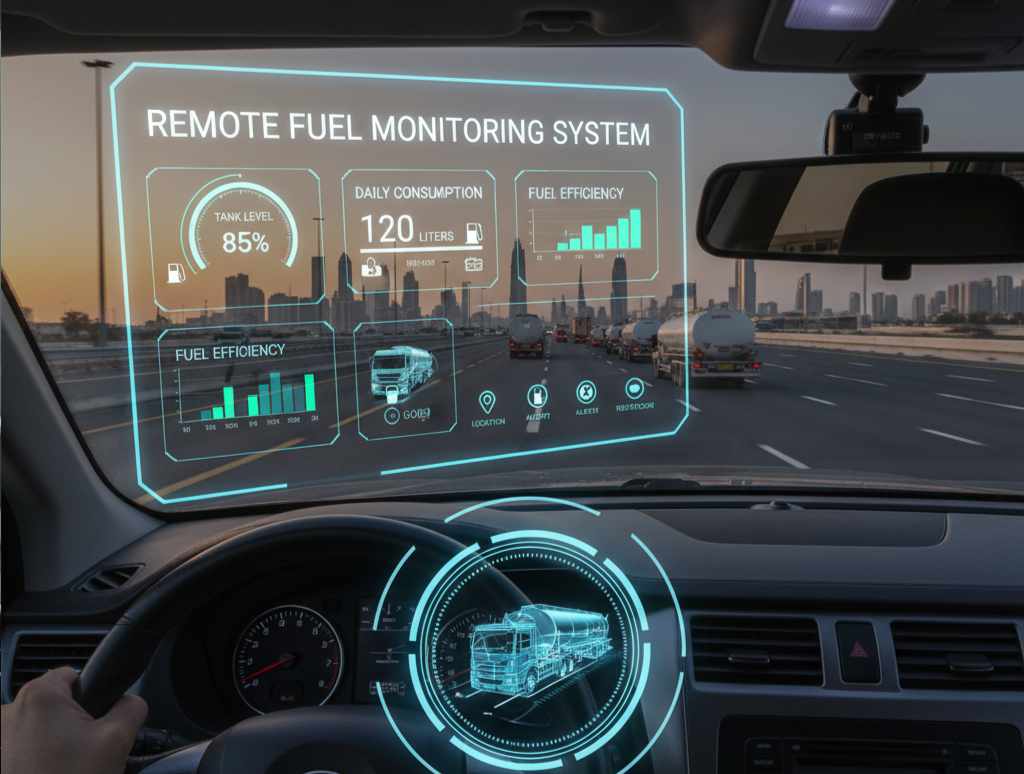
Fuel level is measured every 10-60 seconds and sent to cloud servers. You see it in a mobile app or web dashboard, and suspicious activity triggers an instant alert.
Siphoning shows up as a sudden drop in fuel level (say, 20 litres in 5 minutes) while the vehicle is parked and not refuelling. The fleet manager gets an alert straight away by SMS, email or app, with the location, time and amount recorded. Over time, the pattern analysis picks out repeat offenders.
False receipts are caught by checking them against actual fill-ups. The system records every refuelling event with:
- The exact location (GPS coordinates)
- The time and date
- The amount added in litres
- The odometer reading
Compare what the receipt claims with what the data shows, and any mismatch is obvious at once.
Fuel card fraud is caught in three ways. Geolocation checks flag a card used 50 km from where the vehicle was. Timing checks flag fuel 'added' when the vehicle wasn't at the pump. Capacity checks flag a claim of 80 litres for a 60-litre tank. Usage pattern analysis catches the rest.
For idling, the system measures exact idle time (engine running, vehicle stationary), separates productive from unproductive idling, produces idle reports by vehicle and driver, and lets you set your own thresholds, for example an alert after 10 minutes. A typical alert reads 'Vehicle 23 has been idling for 15 minutes at [location]', and the fleet manager can call the driver immediately. Once drivers know they're accountable, unnecessary idling drops.
For efficiency, the system works out litres per kilometre for every trip and lets you compare fuel economy by driver, by vehicle and by route, with daily, weekly and monthly trends. You'll see your best drivers (lowest L/km) and your worst (highest L/km). You'll spot vehicles whose efficiency points to a maintenance problem, and routes that burn more than they should.
UAE businesses that put in GPS fuel monitoring report:
- 20-35% lower total fuel costs
- 15-20% less unauthorised consumption
- 40-60% less idling
- 25-30% better fuel efficiency per kilometre
- 90-95% of fuel theft incidents eliminated
- ROI within 6-8 months
Our fuel tracking system is built for monitoring UAE fleet operations.
Strategy #2: Optimize Routes with AI-Powered GPS Tracking
Route optimisation through GPS tracking saves fuel from the first week, and you can measure it.
The better systems pull live traffic data from RTA (Dubai), DoT (Abu Dhabi) and Google Maps, add predicted traffic patterns from historical data, reroute on the fly when there's a delay, steer around congestion automatically and adjust routes by time of day.
For multi-stop work, the AI works out the best delivery sequence for 10, 20 or 50+ stops, taking into account traffic, time windows, vehicle capacity and priority. That cuts total distance by 15-30%, removes most backtracking and keeps routes updated as new orders come in.
Over time the system learns which routes work best and how each road behaves at different times, and adjusts future routes based on past performance, so efficiency keeps improving. Drivers get turn-by-turn directions in their mobile app, live traffic updates with suggested alternatives, geofenced checkpoints that verify deliveries, and alerts when they go off route.
Run the numbers on a 30-vehicle fleet. Before optimisation, each vehicle drives 120 km a day, so the fleet covers 3,600 km. At 12 km/L that's 300 litres a day. The monthly fuel bill is 6,600 litres × AED 4.30 = AED 28,380, or AED 340,560 a year.
With a 25% efficiency gain, daily distance falls to 90 km per vehicle and fuel use to 225 litres a day, saving 75 litres. That's 1,650 litres a month × AED 4.30 = AED 7,095, and AED 85,140 a year.
You also get more deliveries per day from the same vehicles, on-time delivery improves by 45-55%, customers are happier, drivers are less stressed and vehicles wear more slowly.
As our GPS tracking challenges article explains, UAE businesses that use route optimisation report 25-40% more daily delivery capacity.
Strategy #3: Driver Behavior Monitoring and Coaching
Changing how your drivers drive gives you fuel savings that last, and you don't need any extra hardware for it.
GPS tracking records:
- Harsh acceleration (rapid speed increase)
- Harsh braking (rapid deceleration)
- Sharp cornering (excessive lateral G-force)
- Speeding (above the posted limit or your company threshold)
- Rapid lane changes
- Excessive RPM (over-revving)
- Long idling periods
- After-hours use
The system turns that into a driver safety score from 0 to 100, based on the number and severity of harsh events, how often and how long drivers speed, idle time as a percentage, fuel efficiency (L/km against the fleet average), route adherence and, if you monitor it, seat belt use. Weekly and monthly reports show your top 10 drivers (for recognition and rewards), your bottom 10 (for coaching), each driver's trend over time and fleet-wide benchmarks.
Coaching works best in three steps. Start with an individual review and show the driver their own data: 'You had 47 harsh braking events this month. The fleet average is 12. Your fuel consumption is 18% above average, and that costs the company AED 380 a month.' Numbers like that land far better than general complaints.
Then train on what matters for that driver. Eco-driving covers smooth, gradual acceleration, anticipating stops and coasting up to red lights, holding a steady speed, choosing the right gear and not idling. Add route familiarisation, awareness of traffic patterns and tips specific to the vehicle.
After that, keep watching. Check in weekly on progress, use real-time alerts for repeat violations, apply progressive discipline for drivers who won't change, and recognise and reward improvement.
Gamification helps more than people expect. A monthly competition might pay:
- Best fuel efficiency: AED 500 bonus
- Most improved driver: AED 300 bonus
- Zero harsh events: AED 200 bonus
- Lowest idle time: AED 200 bonus
Public recognition adds to it: a 'Driver of the Month' award, a leaderboard in the break room, company-wide announcements and certificate programmes.
UAE fleets that monitor and coach drivers report:
- 50-70% fewer harsh acceleration events
- 40-60% less harsh braking
- 60-80% fewer speeding violations
- 45-65% less excessive idling
- 15-25% better fuel efficiency
- 40-60% fewer accidents
For a 30-vehicle fleet, the maths goes like this. Before monitoring, average consumption is 10 km/L and the monthly fuel bill is AED 87,000. After six months of coaching, fuel efficiency is 20% better, average consumption rises to 12 km/L and the monthly bill falls to AED 72,500. That's AED 14,500 saved every month, or AED 174,000 a year.
Strategy #4: Regular Vehicle Maintenance
A well-maintained vehicle runs at its best fuel efficiency. A neglected one doesn't.
On the engine side:
- Change the oil every 5,000-10,000 km
- Replace the air filter every 15,000-30,000 km (a dirty one raises consumption by 10-15%)
- Replace spark plugs every 30,000-100,000 km (worn ones raise consumption by 5-10%)
- Clean fuel injectors every 50,000 km (clogged ones waste 5-15% of fuel)
- Run engine diagnostic checks every 10,000 km
Tyres matter more than most people think. Check pressures weekly in UAE heat, and do it in the morning when the tyres are cool; running 10 PSI under costs you 3-5% more fuel. Get the alignment checked every 20,000 km or whenever the vehicle pulls, since misalignment adds 5-7%. Rotate tyres every 10,000 km, and buy quality tyres with low rolling resistance.
For the transmission and drivetrain, change the transmission fluid on the manufacturer's schedule, service the differential every 40,000-60,000 km and inspect the CV joints and U-joints.
In the UAE, the air conditioning needs attention too. Check the AC system every year before summer, keep refrigerant topped up (low levels make the AC work harder), replace the cabin air filter every 15,000 km and clean dust and sand out of the condenser. An inefficient AC can add 20-30% to fuel consumption.
Modern fleet management systems help with all of this. They track the odometer to schedule maintenance automatically, monitor engine hours so servicing follows actual use, alert you to diagnostic codes early, and flag a drop in fuel economy. If a vehicle that normally does 12 km/L is suddenly doing 9 km/L, something needs attention, whether that's a clogged filter, bad spark plugs or something else.
Put the neglect together and it adds up fast. A dirty air filter (+10%), under-inflated tyres (+5%), misaligned wheels (+5%), worn spark plugs (+8%) and an inefficient AC (+20%) come to 48% extra fuel. A well-maintained vehicle runs at its rated efficiency and lasts longer.
For a 30-vehicle fleet with a normal fuel bill of AED 87,000 a month, poor maintenance pushes it to AED 128,760 (+48%). Good maintenance saves AED 41,760 a month, or AED 501,120 a year.
Maintenance costs money, but not as much as it saves. Average maintenance per vehicle is AED 3,000-5,000 a year, or AED 90,000-150,000 for 30 vehicles. Proper maintenance saves AED 300,000-500,000 in fuel, for a net benefit of AED 210,000-350,000 and an ROI of 140-233%.
Strategy #5: Right-Sizing Your Fleet
Put the right vehicle on each job and you stop paying to haul around capacity you don't use.
Take light package delivery. Send a large van that does 8 km/L on a 100 km day and it burns 12.5 litres, which at AED 4.30 is AED 53.75 a day, AED 1,183 a month and AED 14,190 a year.
A compact van doing 12 km/L on the same 100 km uses 8.3 litres. That's AED 35.69 a day, AED 785 a month and AED 9,422 a year. Switching saves AED 4,768 per vehicle every year.
GPS tracking shows you how each vehicle is really used:
- Payload: are vehicles running around half empty?
- Distance: do they actually need long-range tanks?
- Terrain: how much is highway and how much is city?
- Stops: frequent deliveries or long hauls?
With that data you can replace oversized vehicles with more efficient ones, put couriers and document runs in small cars, keep the big trucks for genuinely heavy loads, match capacity to the typical payload, and look at hybrids or EVs for short urban routes.
For urban delivery in Dubai, Abu Dhabi and Sharjah, a sensible starting point is:
- Light packages: compact vans (12-15 km/L)
- Medium loads: mid-size vans (10-12 km/L)
- Heavy loads: full-size trucks (6-8 km/L)
On inter-emirate routes, give sales reps fuel-efficient SUVs, use diesel for long distances, and favour aerodynamic designs for highway speeds.
In a 30-vehicle fleet where 10 vehicles are too big for their usual work, right-sizing saves AED 4,768 per vehicle, or AED 47,680 a year in total.
Strategy #6: Leverage Technology and Telematics
Modern telematics gives you far more to work with on fuel than a tracker ever did.
The fuel dashboard shows:
- Total fuel consumption, in litres and cost
- Fuel economy trends by day, week and month
- Cost per kilometre for each vehicle
- Cost per delivery or service call
- Each vehicle compared against the fleet average
- Fuel theft incidents, with count, amount and location
- Idle time, in total hours and cost
The reporting goes further. Exception reports pick out vehicles with abnormal consumption. Driver comparison reports rank drivers by efficiency. Route reports show which routes burn the most fuel, time-based analysis shows consumption patterns by hour, day and month, and cost allocation splits fuel costs by customer, project or department.
It connects to other systems too. Fuel card integration verifies receipts automatically, ERP integration syncs with accounting and invoicing, customer systems can receive delivery tracking and fuel surcharges, and maintenance systems can trigger a service when consumption changes.
Drivers get a mobile app that shows their fuel economy in L/km as they drive, gives eco-driving feedback in real time, gives directions along fuel-efficient routes, captures fuel receipts as photos tied to GPS location, and shows their performance scores and leaderboard position.
Because it's cloud-based, you can get at the data from the office, at home or on your phone. Backups and data retention are automatic, several users can log in with role-based permissions, there's API access for custom integrations, and new features arrive through regular updates.
AI and machine learning add a predictive layer. The platform forecasts fuel costs from trends, predicts maintenance needs before something fails, finds patterns in theft and waste and suggests schedules that use the least fuel. Its anomaly detection flags unusual consumption, possible theft or leaks, declining vehicle performance and inefficient routes on its own. And it keeps improving. It learns from your fleet's history, recommends route changes based on actual performance, suggests which vehicle should do which job, and predicts the best places and times to refuel.
Our GPS tracking software includes full telematics and AI-powered fuel analytics.
Cut Your Fleet's Fuel Bill by 25–35%
IOTee fuel monitoring catches theft as it happens, tracks consumption per vehicle, and usually pays for itself within 4 to 6 months.
Illustrative UAE Fuel Savings Scenarios
Example 1: Dubai Delivery Fleet (45 Vehicles)
The three scenarios below are illustrative, built from typical UAE fleet figures rather than a named customer's books.
A delivery company ran 45 light commercial vehicles and spent AED 87,000 a month on fuel. It had no visibility into consumption patterns or theft.
It put in:
- GPS tracking on every vehicle
- A wireless fuel sensor on each vehicle
- A real-time fuel monitoring dashboard
- Driver behaviour monitoring
- Route optimisation software
- Weekly driver coaching sessions
After 12 months the results broke down like this.
Theft came first. The system uncovered AED 18,500 a month in fuel theft, 21% of the budget. Siphoning cases led to 12 drivers being caught, of whom 5 were dismissed and 7 warned. False receipt claims worth AED 4,200 a month were recovered. Stopping theft saved AED 273,000 a year.
Idling dropped from an average of 3.2 hours per vehicle per day to 0.8 hours, a 75% cut. That saved 84 litres a day across the fleet, or AED 60,500 a year.
Route optimisation cut average daily distance by 23%, from 142 km to 109 km, while daily deliveries rose 37.5% from 280 to 385. Fuel savings came to AED 87,300 a year.
Driving improved as well. Harsh acceleration events fell 68% and speeding violations 71%. Fuel efficiency went up 16%, saving AED 52,800 a year.
Total annual savings:
- Theft prevention: AED 273,000
- Idle reduction: AED 60,500
- Route optimisation: AED 87,300
- Driver behaviour: AED 52,800
- Total: AED 473,600
The GPS and fuel monitoring system cost AED 67,500, with monthly service fees of AED 4,500 (AED 54,000 a year), so first-year cost was AED 121,500. Net savings in year 1 were AED 352,100, an ROI of 290% with payback in 3.1 months.
The owner put it like this: "We discovered we were losing AED 18,500 every month to fuel theft alone—money just disappearing. The GPS fuel monitoring system paid for itself in 3 months. Now we're saving almost half a million dirhams annually."
Example 2: Abu Dhabi Construction Fleet (60 Vehicles)
A construction company ran 60 mixed vehicles (trucks, vans and pickups) and spent AED 145,000 a month on diesel. Management suspected theft and unauthorised use.
It installed:
- GPS trackers on all 60 vehicles
- Fuel sensors on the 40 highest-value vehicles
- Geofences around job sites and fuel stations
- After-hours movement alerts
- Idle time monitoring
- A driver identification system
Within 12 months the problems were clear. Seven drivers had been using vehicles at weekends for their own business, running up more than 12,000 unauthorised kilometres a month. They were dismissed and the practice stopped, saving AED 98,400 a year.
Theft was worse. About 23% of the fuel budget was being stolen through systematic siphoning by several drivers and fuel card fraud used to fill personal vehicles. Stopping it saved AED 400,560 a year.
The vehicles also idled too long at job sites. Average idling fell from 2.8 hours per vehicle per day to 1.1 hours, a 60% reduction worth AED 125,280 a year.
Total annual savings:
- Unauthorised use: AED 98,400
- Fuel theft: AED 400,560
- Idle reduction: AED 125,280
- Total: AED 624,240
The GPS system for 60 vehicles cost AED 72,000, fuel sensors for 40 vehicles AED 48,000, and annual service fees AED 86,400, so first-year cost was AED 206,400. Net savings in year 1 were AED 417,840, an ROI of 202% with payback in 4 months.
Example 3: Sharjah Delivery Fleet (20 Vehicles)
A small delivery company with 20 vans spent AED 42,000 a month on fuel. Costs were rising and margins were thin.
It went for a lighter setup:
- GPS tracking (basic package)
- Route optimisation software
- Driver scoring and coaching
- Weekly performance reviews
- An incentive programme for efficient drivers
After 12 months, AI routing had cut daily distance by 28%. The vans made the same deliveries over fewer kilometres, saving AED 84,672 a year.
The driver competition paid monthly bonuses to the three most efficient drivers and gave coaching to the bottom three. Fuel efficiency rose 19% across the fleet, worth AED 57,456 a year.
Idling was mostly a matter of awareness. Drivers started switching off during stops, idle time fell 52% and the company saved AED 31,200 a year.
Total annual savings:
- Route optimisation: AED 84,672
- Driver improvement: AED 57,456
- Idle reduction: AED 31,200
- Total: AED 173,328
The GPS system for 20 vehicles cost AED 24,000, annual service AED 28,800 and driver bonuses AED 10,800, for a first-year total of AED 63,600. Net savings in year 1 were AED 109,728, an ROI of 173% with payback in 4.4 months.
Complete Fuel Reduction Implementation Plan
Step-by-Step Implementation for UAE Fleets
Phase 1 is assessment, in weeks 1-2. Start by understanding where you are now:
- Document your current monthly fuel spend
- Work out the fuel cost per vehicle
- List vehicle types and how each is used
- Review whatever monitoring you already have
- Look at your driver training
- Check your maintenance schedules
Then set goals. Aim for a realistic 20-30% fuel reduction in year 1, record baseline figures to measure against, decide what success looks like and set a budget for the technology.
Phase 2, in weeks 3-6, is choosing and installing the system. Pick a provider with UAE experience, make sure the system complies with RTA and Dubai Police requirements, check it's certified by insurers (so you qualify for premium discounts), confirm Arabic and English support and check what it integrates with.
Installation should cover:
- Professional fitting on every vehicle
- GPS trackers and fuel sensors
- Driver mobile app setup
- Dashboard configuration
- Geofences around your facilities, fuel stations and restricted areas
Train fleet managers on the dashboard and drivers on the mobile app, and cover how to generate and read reports and how to set up and respond to alerts.
Phase 3, in weeks 7-10, is data collection. Gather four weeks of detailed data to set your baseline. Look for patterns, record theft incidents, measure idle time, analyse route efficiency and assess driver behaviour. By the end you should be able to answer these questions:
- Which vehicles use the most fuel?
- Which drivers are least efficient?
- Where is fuel being stolen?
- Which routes waste the most?
- How much idling is excessive?
Phase 4, weeks 11-20, is when you act on it.
Deal with theft first. Confront drivers with the evidence, dismiss the worst offenders, issue warnings and discipline where appropriate, set a zero-tolerance policy and fit tamper-proof fuel caps.
Switch on AI route optimisation, give drivers their optimised routes, check they follow them and adjust based on their feedback.
Coach drivers one to one. Meet the least efficient ones, show them their data and what it costs, give eco-driving training, set improvement targets and start the incentive programme.
Review maintenance too. Inspect vehicles with poor fuel economy, book the work they need, set up an ongoing maintenance calendar and use the GPS odometer to schedule services automatically.
Phase 5, from week 21, is monitoring and fine-tuning. Review theft alerts daily, efficiency reports weekly, driver performance monthly and ROI quarterly. Keep refining routes with the performance data, adjust coaching based on results, recognise and reward your top performers, act quickly when anyone's performance slips and share what's working across the fleet.
For reporting, you'll want:
- Monthly fuel savings reports
- Executive dashboard summaries
- Driver scorecards
- ROI documentation for management
- Documentation for insurance discounts
As for when you'll see results: in months 1-2, you're installing and measuring the baseline, and theft detection starts working immediately, for initial savings of 5-10%. By months 3-4, route optimisation and better driving kick in and cumulative savings reach 12-18%. In months 5-6, the system is fully adopted, drivers have adjusted to being monitored, and you should hit your 20-25% target. From months 7 to 12, ongoing optimisation and lasting behaviour change take savings to their maximum of 25-35%.
IOTee's Comprehensive Fuel Management Solution
Complete Fuel Monitoring for UAE Fleets
At IOTee we offer a fuel tracking system built for UAE operating conditions, and we'd argue it's the most complete one available here.
The hardware includes:
- GPS trackers for real-time location, speed and route tracking
- Wireless fuel sensors accurate to 0.5-1%, heat-resistant for the UAE
- Professional installation that's hidden, secure and backed by warranty
- A tamper-proof design that alerts you if anyone tries to remove it
- A backup battery that keeps transmitting if the main power is cut
The software platform gives you:
- Real-time fuel monitoring (current level and consumption rate)
- Theft alerts by SMS, email and app, instantly
- Idle time tracking so you can measure and cut wasteful idling
- AI route optimisation using Dubai and Abu Dhabi traffic
- Driver behaviour monitoring for acceleration, braking, speeding and cornering
- More than 50 pre-built reports
- iOS and Android apps that work offline
- A web dashboard you can open on any computer
- A fully bilingual Arabic/English interface
On top of that:
- Fuel card integration with automatic receipt checks
- Unlimited geofences with entry and exit alerts
- Maintenance reminders based on the odometer
- Driver identification by iButton or RFID
- Temperature monitoring for refrigerated vehicles
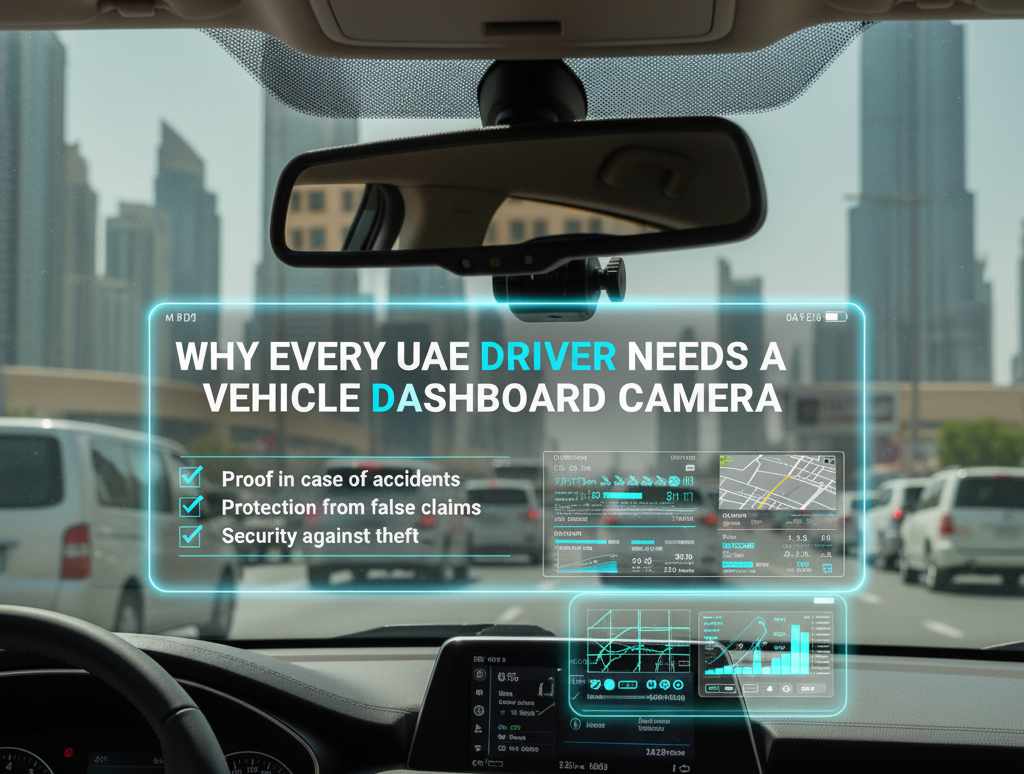
- Dashcam footage linked to fuel events
- API access to connect your ERP or accounting systems
And the services around it:
- A free consultation to analyse your fleet and estimate savings
- Installation by certified technicians across the UAE
- Training for fleet managers and drivers
- 24/7 support in Arabic and English by phone, email and WhatsApp
- Monthly ROI and savings reports
- Free firmware and software upgrades
- A 3-5 year warranty on hardware
Why IOTee? We serve Dubai, Abu Dhabi, Sharjah and every other emirate. Our GPS tracking systems are Dubai Police approved and RTA compatible, and they're insurance certified, so you can qualify for 5-10% premium discounts. We have local UAE offices and a local support team, and we know the traffic, the climate and how business works here.
On results, more than 100 UAE businesses use our systems. We've documented average fuel savings of 20-35%, a theft detection rate above 95% and ROI typically within 3-8 months.
Fuel monitoring also sits inside a wider platform. It works with our fleet management service, alongside vehicle camera installation, and with real-time GPS tracking for everything else.
Packages scale with your fleet:
- Personal vehicles (1-5 vehicles): basic fuel monitoring
- Small fleets (5-20 vehicles): GPS, fuel sensors and route optimisation
- Medium fleets (20-50 vehicles): the complete solution plus driver coaching
- Large fleets (50+ vehicles): the enterprise platform with dedicated support
Pricing is transparent, with no hidden fees, competitive UAE rates, volume discounts for fleets and financing options. We also offer an ROI guarantee, and we'll show you the savings.
Get Started: Free Fuel Waste Assessment
Our free assessment tells you how much fuel money you're losing, in five parts.
First, we analyse your current fuel costs. We calculate your actual monthly and annual fuel spend, benchmark it against industry averages and point out any red flags in the data.
Second, we estimate theft and waste. Industry data suggests losses of 15-30% are typical, so we estimate your own exposure and show you the costs you're not seeing.
Third comes a savings projection, with a conservative estimate (20%), an aggressive one (35%), and monthly and annual savings in AED.
Fourth, the ROI calculation: what the system costs, the savings you can expect each month, the payback period (typically 3-8 months) and projected total savings over five years.
Fifth, a recommendation sized for your fleet, with an implementation timeline and a quote you're under no obligation to accept.
For a 30-vehicle fleet, a typical assessment might show:
- Current annual fuel spend: AED 1,044,000
- Estimated waste (25%): AED 261,000
- Projected savings with IOTee: AED 208,800-365,400 a year
- System investment: AED 120,000-180,000
- Payback: 4-7 months
- 5-year savings: AED 1,044,000-1,827,000
To request your free assessment:
- Email: info@iotee.ae
- Website: iotee.ae
- Services: Fuel Tracking System
- Offices: Dubai and Abu Dhabi
Get in touch and we'll analyse your fleet and show you how much you can save.
Go deeper: Our vehicle GPS tracking hub covers devices, pricing and installation for cars and fleets across the UAE.
Conclusion: Take Control of Your Fuel Costs Today
The Evidence Is Overwhelming
Traffic congestion costs Dubai AED 2.9 billion a year, diesel hit AED 4.30 a litre in September 2026, and 15-30% of fleet fuel budgets disappear to theft and waste. Doing nothing is expensive.
The figures from this guide, in one place:
- AED 771,147 per kilometre lost to Dubai traffic congestion
- AED 12,000 per vehicle wasted every year in congested areas
- 1.6 million litres burned idling in traffic
- 15-30% fuel theft is typical without monitoring
- 40-60% less idle time with GPS monitoring
- 25-40% better route efficiency with optimisation
- 20-35% total fuel savings with a complete system
UAE fleets using fuel monitoring report:
- 20-35% lower total fuel costs
- 90-95% of fuel theft eliminated
- 40-60% less idle time
- 15-25% better fuel efficiency per km
- ROI within 6-8 months
- Payback in 3-8 months
- 300-700% ROI over five years
Every day without monitoring, fuel is siphoned away, engines idle for hours, drivers cover extra kilometres on poor routes, aggressive drivers burn 30-40% more than they need to, and competitors who do monitor get more out of every dirham.
The technology works and the returns are well documented. UAE businesses using GPS fuel monitoring save an average of AED 8,700-12,100 per vehicle a year. For a 30-vehicle fleet that's AED 261,000-363,000 of profit back every year.
Getting started takes four steps:
- Request your free fuel waste assessment
- See exactly how much you're losing
- Get a solution sized for your fleet and ROI projection
- Install and start saving within weeks
Every month you wait, the fuel budget keeps leaking through theft, waste and inefficient driving, while competitors with GPS fuel monitoring run 20-35% more efficiently and win the work.
Contact IOTee:
- Email: info@iotee.ae
- Website: iotee.ae
- Fuel tracking: iotee.ae/services/fuel-tracking-system
- Fleet management: iotee.ae/services/fleet-management
- GPS tracking: iotee.ae/services/real-time-gps-tracking
- Offices: Dubai, Abu Dhabi and all UAE emirates
For further reading, GPS Tracking Challenges in UAE 2025 covers traffic congestion and road safety statistics, and Why UAE Needs Car Tracker with Dash Camera is our full vehicle protection guide.
Current offers:
- Free installation with an annual subscription (limited time)
- 10% fleet discount for 20+ vehicles
- A free 3-month trial for qualifying fleets
- An ROI guarantee, where we prove the savings
You can keep losing 20-35% of your fuel budget, or put monitoring in and recover AED 200,000-500,000+ a year. You can keep guessing where the fuel money goes, or know how every litre is used. Fuel monitoring costs little. Not monitoring costs a lot more.
Contact IOTee for your free fuel waste assessment, and you could be saving from the week after installation.