Tire Management & TPMS for UAE Fleets

Live pressure and temperature on every wheel position. Predict wear, catch blowouts before they happen in 50ยฐC heat, automate rotation and retread reminders, and see cost-per-kilometer for every tire in your fleet. We cover Dubai, Abu Dhabi, Sharjah and the GCC.
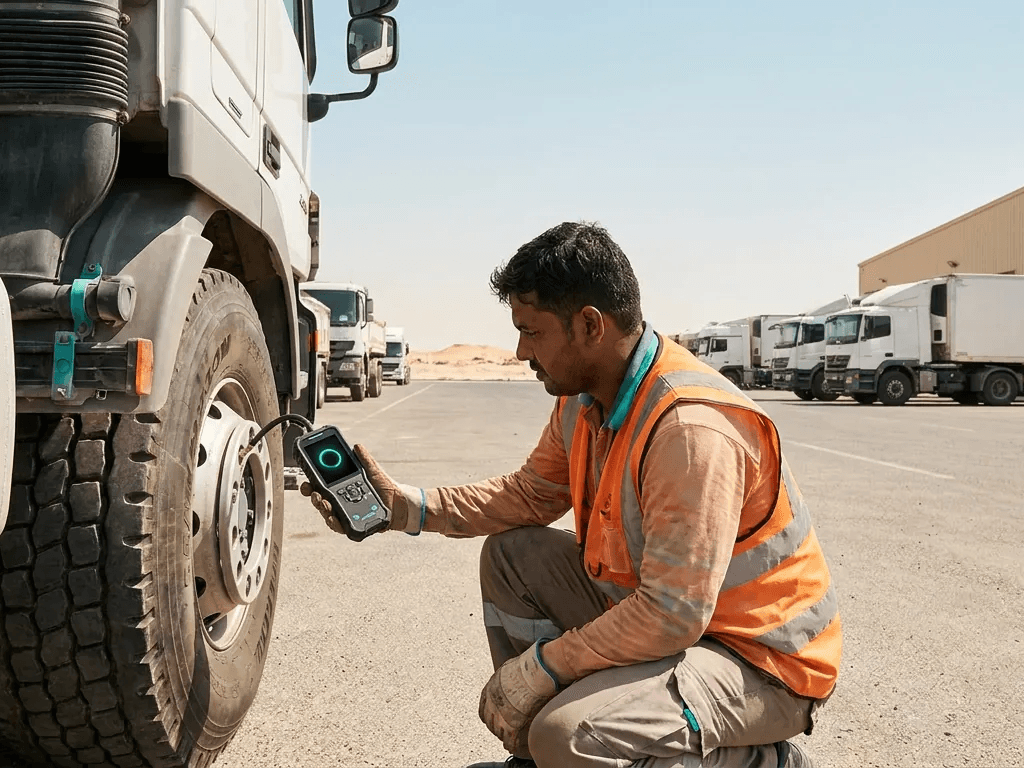
Tire Management & TPMS for UAE Fleets

WHAT IS TIRE MANAGEMENT

What is tire management (TPMS)?

Tire management means treating fleet tires as tracked assets, with TPMS sensors watching pressure and temperature on every wheel. IOTee provides tire management across the UAE, including Dubai, Abu Dhabi and Sharjah: live TPMS pressure and temperature alerts, blowout warnings for 50ยฐC heat, wear prediction and cost-per-kilometer reports.

Everything You Need to Manage Tires as an Asset

Built for UAE heat and loads, where tires are the #2 cost line after fuel

Real-Time TPMS

Wireless pressure and temperature sensors on every wheel send live data. You get alerts for under-pressure, over-pressure, fast leaks and high temperature.

Wear Prediction

An AI model estimates tread depth from mileage, route profile, load, axle position and driver behavior, and predicts tire end-of-life within 5%.

Blowout Prevention

Spots heat spikes and pressure drops 30-90 minutes before a tire fails. That matters at highway speed in summer.

Rotation & Retread Scheduling

Reminders for rotation, alignment and retreads, timed by how each tire is actually wearing instead of fixed mileage.

Cost-Per-Kilometer Analytics

See what each tire really costs per km by brand, model, axle position, route and driver. Buy tires and chase warranties with numbers behind you.

Tire Inventory & Lifecycle

Track every tire from purchase to retread to scrap. Manage warranty claims, compare suppliers, and trace tires down to the DOT code.

Why UAE Fleets Need Smart Tire Management

With 50ยฐC heat and long cross-emirate runs, good tire management pays for itself

Safety & Blowout Prevention

Stop the tire incidents that do the most damage and cost the most on UAE highways.

  • Detect heat-stress failures before they happen
  • 70-90% reduction in roadside blowout incidents
  • Documented driver and public safety improvements
  • Insurance liability reduction with monitoring evidence

Tire Cost Reduction

After fuel, tires are the biggest fleet operating cost. Managing them well shows up straight in your margins.

  • 8-15% reduction in total tire spend per kilometer
  • 20-30% extended tire lifespan via correct pressure
  • 5-10% better fuel economy from correct pressure
  • Reduced unscheduled downtime from tire failures

Operational & Compliance

Records you can hand to a tender panel, and a clear view of every tire for fleet and procurement teams.

  • Audit-ready tire inspection records
  • RTA and Salik commercial fleet compliance
  • Procurement decisions backed by performance data
  • Tire warranty claims with full evidence trail

Tire Management Across UAE Industries

Used by heavy trucking, passenger transport, last-mile delivery and specialist fleets

๐Ÿš›

Heavy Trucks & Lorries

TPMS for tractor units and trailers, including the inner tire of dual pairs that visual checks always miss.

๐ŸšŒ

Bus & Coach Fleets

Tire monitoring for school buses, staff transport and tourist coaches, where passenger safety comes first.

๐Ÿš

Logistics & Delivery Vans

Last-mile and regional delivery fleets, where one flat tire can wreck a route and miss customer SLAs.

๐Ÿ—๏ธ

Construction & Off-Road

Heavy-duty TPMS for OTR tires on construction sites, fuel tankers, mining equipment, and worksite vehicles.

๐Ÿ”‘

Rental & Leasing Fleets

Per-vehicle and per-customer tire condition reporting for car rental, leasing, and corporate fleet outsourcing.

๐Ÿš–

Taxi & Ride-Hail Fleets

High-mileage passenger fleets, where a tire failure costs the driver a shift and puts passengers at risk.

Tire Management Hardware & Platform Specifications

Sensor Types โ€” Internal valve-stem and external screw-on TPMS for passenger, light commercial and heavy-duty
Pressure Range โ€” 0-12 bar (0-174 PSI), accuracy ยฑ0.1 bar, suitable for OTR and heavy truck
Temperature Monitoring โ€” -40ยฐC to +120ยฐC tire temperature, calibrated for 50ยฐC+ UAE ambient conditions
Sensor Battery Life โ€” 5-7 years on internal sensors, replaceable on external models
Alert Types โ€” Under/over-pressure, fast leak, slow leak, high temperature, sensor failure
Connectivity โ€” RF receiver in cab + 4G LTE upload to fleet platform with cloud dashboard
Vehicle Compatibility โ€” All passenger, light commercial, heavy truck, bus, trailer, and OTR vehicles
Platform Integration โ€” Fleet management, telematics, GPS, maintenance, and tire shop POS systems
Analytics Engine โ€” Wear prediction, cost-per-km, axle-position trends, brand and supplier benchmarking
Standards & Compliance โ€” ECE R141 TPMS standard, DOT tire identification, RTA commercial vehicle compliance

What Your Business Gets

๐Ÿ’ฐ

Lower Tire Spend

8-15% lower cost per kilometer from better wear management and warranty enforcement

๐Ÿ›ก๏ธ

Fewer Blowouts

70-90% reduction in roadside tire failures and the downtime they cause

โ›ฝ

Better Fuel Economy

5-10% better fuel economy from correct tire pressure across the fleet

โœ…

Safer Operations

Documented tire safety culture for tenders, audits, and insurance underwriting

Tire Management & TPMS FAQs

Fleet tire management means watching and maintaining every tire in your fleet from one platform: live TPMS data, wear analysis, rotation schedules, lifecycle records and cost-per-km reports. The UAE is hard on tires. Summer temperatures above 45ยฐC, high highway speeds and heavy loads wear out neglected tires fast. Tires are the #2 fleet cost after fuel. Managing them properly usually saves 8-15% directly, and it heads off the worst failures, like a blowout on Sheikh Zayed Road or the E11.
TPMS (Tire Pressure Monitoring System) puts a wireless sensor at each wheel that keeps sending pressure and temperature data. UAE regulations follow the international ECE R141 standard: passenger vehicles built after 2014 need factory TPMS, and many commercial fleet tenders now ask for aftermarket TPMS before you can bid. In practice, any commercial fleet on highway routes should have it. An under-inflated tire in summer heat at 120 km/h is the most preventable serious incident there is, and TPMS flags the problem 30-90 minutes before the tire fails.
Both work. They suit different fleets. Internal valve-stem TPMS sits inside the tire, so it's more accurate, lasts longer on a battery (5-7 years) and can't be tampered with, but the tire has to come off the rim to fit it or change the battery. External screw-on TPMS replaces the valve cap. It's quicker and cheaper to fit and the batteries are replaceable, but sensors get stolen more and read slightly less accurately. Our advice: internal for heavy trucks, buses and long-life commercial fleets; external for light commercial, rentals and short-term jobs. We'll help you pick per vehicle class during the assessment.
Mileage alone doesn't tell you how a tire is wearing. Our platform looks at actual mileage and route profile (highway or city), load weights, axle position (steer, drive, trailer), pressure history, heat exposure and driver behavior, since harsh braking and cornering wear tread faster. The AI model predicts tread depth and end-of-life to within 5%. You can order replacements just in time, plan rotations around real wear, and find the routes or drivers that eat tires.
Most fleets buy tires on sticker price. A better number is cost-per-kilometer: what each tire costs over its whole life. A premium tire at AED 1,800 that lasts 120,000 km works out at AED 0.015 per km. A budget tire at AED 1,200 that lasts 60,000 km costs AED 0.020 per km, which is 33% more. Our platform tracks CPK by brand, model, supplier, axle position and route, so you buy on data instead of purchase price. Plenty of UAE fleets find out their 'budget' tire is the expensive one.
Running just 0.3 bar under pressure adds enough rolling resistance to push fuel use up 3-5%. On a fleet where each vehicle covers 100,000+ km a year, that's tens of thousands of dirhams burned for nothing. Live TPMS alerts drivers the moment pressure drops, so they can fix it before the waste adds up. Pair it with our [fuel tracking system](/services/fuel-tracking-system) and fleet-wide telematics and fuel savings of 5-10% are typical.
Yes. Tire data feeds into our wider [fleet management platform](/services/fleet-management), and it connects to the major third-party fleet, telematics and maintenance systems through REST API and webhooks. Tire shops and service providers can link their POS system, so fittings, rotations and warranty claims update fleet records on their own. You end up with one record per vehicle covering fuel, tires, maintenance, GPS and driver, instead of a pile of spreadsheets.
It depends on sensor type and fleet size. External screw-on TPMS takes 15-20 minutes per vehicle. Internal valve-stem TPMS needs the tire off, so it's usually done during a regular rotation and takes 45-60 minutes per vehicle. A 30-vehicle mixed fleet needs 2-5 days of fitting, often spread across normal maintenance visits so vehicles stay on the road. Platform setup, the driver app and fleet manager training happen at the same time. Full rollout usually takes 2-3 weeks.
Typical UAE pricing: TPMS hardware costs AED 200-450 per wheel one-time for passenger and light commercial vehicles, and AED 600-900 per wheel for heavy trucks and OTR. Platform and connectivity run AED 80-150 per vehicle per month, including analytics, lifecycle tracking and supplier comparisons. For a 30-vehicle mixed fleet, expect AED 60,000-130,000 in year one, then AED 28,000-54,000 a year after that. Most fleets earn it back in 8-14 months on tire savings alone, before you count fuel and avoided downtime.
Yes. Lifecycle tracking is a core part of the platform. Each tire is tracked by DOT code from purchase, through its service life and retreads (heavy truck casings usually take 2-3), to final scrap or sale. Warranty claims go in with the evidence attached: pressure history, heat exposure, mileage, axle position and any related events. Our UAE fleet customers get far more claims approved this way, and many recover thousands in warranty value that would have been refused for lack of paperwork.

Ready to Make Your Tires Pay Their Way?

Talk to IOTee's tire management team. You get a free fleet assessment, supplier comparison and a TPMS rollout plan built around your vehicle mix and routes.