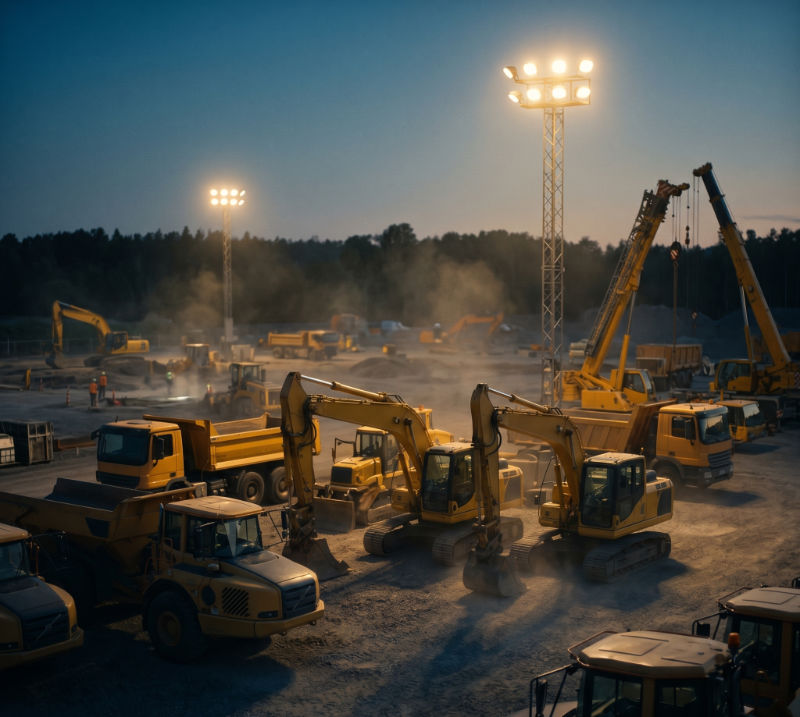
What Construction Equipment Fuel Monitoring Means on a UAE Site
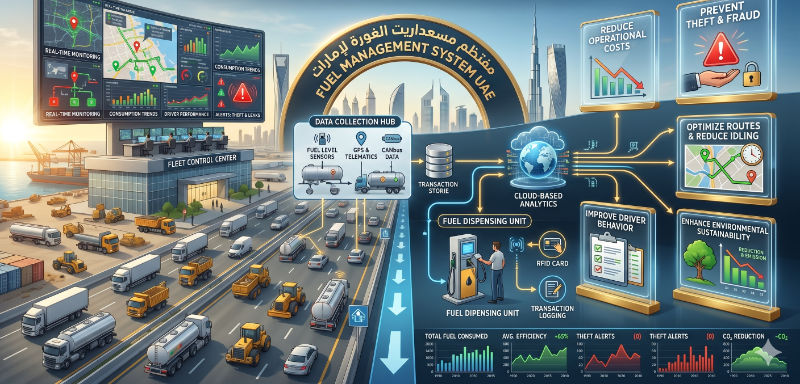
Construction equipment fuel monitoring measures the diesel each machine on a site receives and burns, in litres per engine hour, and flags any litre that leaves a tank without running an engine. On a UAE project that means sensors or CAN data on excavators, loaders and cranes, a metered bowser, and a level sensor on the bulk tank, all reporting to one dashboard.
It matters more this year than it did last year. Diesel is AED 4.80 a litre in October 2026, so a 36-tonne excavator working a normal month burns close to AED 19,700 of fuel. Most contractors know that number for the whole site from the supplier invoice. Very few know it per machine, per shift, and that gap is where idling, over-issuing and theft hide.
This guide covers the site end of the problem: plant, bowsers and bulk tanks. If your diesel goes mainly into gensets, our generator monitoring guide goes deeper on that side, and the construction fleet management guide covers tracking, utilisation and maintenance across the whole equipment fleet.
Why Plant Fuel Is Harder to Control Than Truck Fuel
No Odometer, So Measure Litres per Engine Hour
A truck has a simple efficiency number: kilometres per litre. An excavator can burn 150 litres in a day and move 40 metres. So plant fuel is measured against engine hours, and the useful figure is litres per hour (L/h) for each machine, split into working hours and idle hours.
That split is the whole game. A loader averaging 14 L/h might be working hard all day, or it might be idling for four hours with the AC on and working flat out for the rest. The daily total looks the same. Only hour-by-hour data tells you which one you're paying for.
Diesel Arrives in Bulk and Changes Hands Three Times
Trucks fill up at a station with a card. Site plant almost never does. Diesel arrives by tanker into a bulk tank, gets pumped into a bowser, and the bowser driver goes round the site filling machines. Every hand-off is a point where the paperwork and the litres can part company.
A tanker delivery can be short. A bowser can issue 300 litres and the log can say 340. A machine tank can be drained into jerry cans after the shift. Each of these leaves a different signature in the data, which is why a site needs to measure at all three points and not just at the machine.
What Normal Fuel Burn Looks Like for Heavy Equipment
Start With the Manufacturer's Figure, Then Measure Your Own
Manufacturers publish average burn rates, and they're a decent starting point. Liebherr lists its R 936 Compact crawler excavator, a 34-to-38-tonne machine with a 190 kW engine, at an average of 15.79 litres per operating hour. Smaller machines burn far less, and big dozers and wheel loaders on heavy cuts burn more.
Treat these as a sanity check, nothing more. The real rate depends on the job: trenching in soft sand at Dubai South is not the same load as breaking rock at a RAK quarry. After a month of monitoring, each machine has its own baseline, and that baseline is what your alerts should compare against.
What a 36-Tonne Excavator Costs to Run in October 2026
Take that 15.79 L/h figure and assume 10 engine hours a day and 26 working days a month. That's about 4,105 litres a month, or roughly AED 19,700 at the October price of AED 4.80.
Ten machines like that is close to AED 200,000 of diesel a month. A 5% gap between what you buy and what your engines burn is then about AED 10,000 a month, which is roughly what fuel monitoring on all ten machines costs for a whole year. You can rerun these sums with your own prices on our UAE fuel price tracker.
Idling: The Loss You Can See in the Data
How Much Time Plant Spends Idling
Idling is usually the biggest fuel loss on a site, and it's the easiest to prove. In an industry survey of telematics data in Construction Equipment magazine, Komatsu reported an average idle time of 38% across about 75,000 machines in North America, and Volvo CE put the figure for a large fleet of around 450 machines at 28 to 30%. The same piece notes that owners who actively manage idling aim for about 20%.
At idle, a mid-size excavator burns roughly one US gallon an hour, which is about 3.8 litres. That sounds small until you multiply it by the hours. There's a second cost too: hour-based servicing and warranty clocks keep running while the machine sits still, so idle hours bring the next service forward and cut resale value.
A Worked Idle Saving per Machine
Using the same 10-hour day, 38% idle means 3.8 hours a day at 3.8 L/h, or about 374 litres a month per machine. Bring idling down to the 20% target and that drops to about 197 litres.
The difference is roughly 177 litres, about AED 850 a month or AED 10,200 a year per machine at October prices. It won't happen on its own. It happens when a supervisor gets a daily idle report by machine and operator and acts on the worst three. Our post on engine idling and fuel savings covers the driver-side tactics.
Summer and the Midday Break
UAE summers add a local twist. Outdoor work in direct sun stops between 12.30pm and 3pm from June 15 to September 15, and some machines get left running through the break with the cab AC on. At idle rate that's around 9.5 litres a day per machine, or roughly 760 litres over about 80 working days of summer.
Whether that's acceptable is a site policy decision. The point is to decide it on purpose. A geofenced idle report between 12:30 and 15:00 shows exactly which machines ran, and our midday break planner helps you schedule work around the window.
Following the Litre: Bulk Tank, Bowser and Machine
The Bulk Tank: Check Every Delivery
Put a level sensor on the site's bulk diesel tank and every delivery shows up as a rise in the tank curve. Compare that rise with the delivery note. A tanker that bills 10,000 litres and lifts the tank by 9,700 is a conversation to have with the supplier the same day, while the driver's details are still fresh.
The tank sensor also catches the quiet loss: a level that falls overnight when the bowser is parked and nothing is being issued. That should never happen, and if it does, you've got a leak or a tap someone knows about.
The Bowser: Meter and Identify Every Issue
The bowser is where most site fuel disputes start. A fuel control system on the bowser or the site dispenser records how many litres went out, when, and into which machine, using vehicle identification so the log can't simply be written up at the end of the day.
Small leaks add up here. If a bowser issues 3,000 litres a day and 2% goes unaccounted for, that's 60 litres, or about AED 288 a day. Over a 26-day month it's close to AED 7,500, from one bowser.
The Machine Tank: Match Every Refuel to a Rise
The last check is on the machine itself. A fuel level sensor in the tank records each refuel as a step up. Matching it to the bowser log shows whether the 200 litres issued actually went into the excavator. A sudden drop with the engine off is the classic siphoning signature.
Diesel theft from parked heavy vehicles is a real pattern here. In 2026 Dubai Police broke up a gang that drove up to parked trucks in Jebel Ali and siphoned their tanks. Construction sites have the same weakness at night: big tanks, remote yards and machines parked in the open. Our UAE fuel theft statistics collects the cases and what each one costs at today's prices.
See where your site diesel goes
Fit sensors on your five thirstiest machines and the bulk tank, and get a month of litres-per-hour, idle and refuel data before you decide on the rest.
Hardware for Each Kind of Machine
Newer Machines: Read the CAN Bus and OEM Data
Most recent diesel plant talks over a CAN bus, usually the SAE J1939 protocol used across heavy-duty and off-road vehicles. A telematics unit connected to it can read engine hours, fuel rate and often total fuel used without touching the tank.
If your fleet is mixed, there's also the manufacturers' own telematics. ISO/TS 15143-3, often called AEMP 2.0, is the standard that lets an OEM's cloud pass machine data such as hours, location and fuel used on to other software. Coverage varies by brand and model year, so check which fields your machines actually report before planning around it.
Older Machines: Fit a Probe and Wire the Hours
Older excavators and loaders often have no usable fuel data at all. The answer is a capacitive fuel probe cut to the tank depth, plus an engine-running input so the tracker counts hours. Capacitive probes read to about ±1–2% of tank volume, which is enough to see siphoning and short refuels. Our capacitive vs ultrasonic sensor guide covers when an ultrasonic sensor under the tank makes more sense, for example on hired machines you can't drill.
Don't trust CAN fuel data alone for theft detection. Many machines report fuel level in coarse steps, fine for consumption trends but too rough to catch a 30-litre siphon.
Generators, Light Towers and Pumps
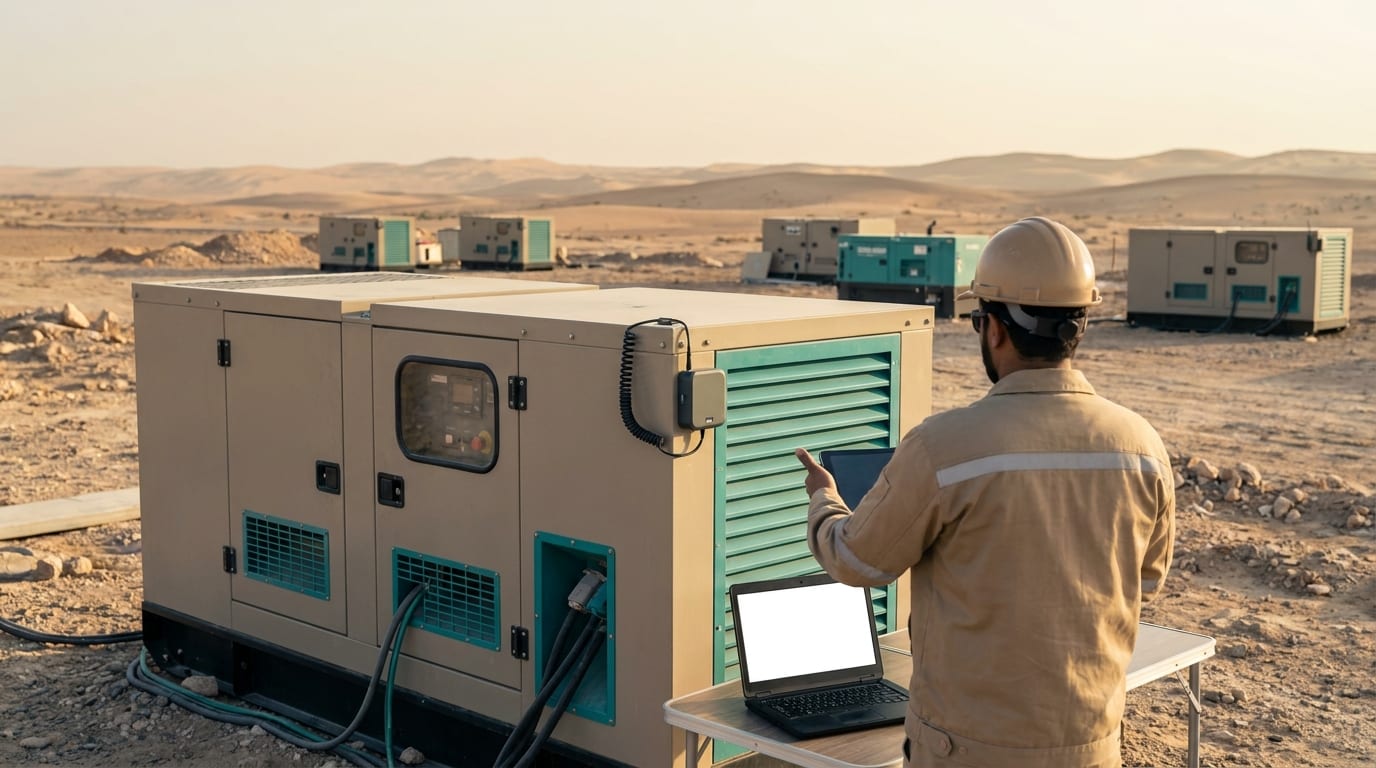
Gensets are often the biggest single diesel users on a site with no grid connection yet, and they run unattended through the night. They take the same tank sensor approach, plus run-hours and load from the controller where available. The generator monitoring service and our generator fuel consumption calculator cover sizing and expected burn.
Small kit like light towers and dewatering pumps rarely justifies a fuel sensor each. An asset tracker that logs location and running hours is usually enough to see whether they're running when they shouldn't be.
Dust, Heat and Weak Signal
Site conditions break cheap hardware. Probes and cables need protecting from vibration and rock strikes, and connectors need sealing against dust. Units should store readings when the signal drops, which happens on remote cuttings and in basements, and send them when coverage returns. A multi-network M2M SIM helps on sites where one carrier is weak.
Reports a Site Manager Will Actually Read
Five Numbers Per Machine, Every Morning
Most monitoring projects fail because nobody looks at the data after the first fortnight. Keep the daily report short:
- Litres per engine hour, against that machine's own baseline
- Idle hours as a share of engine hours, ranked worst first
- Refuels recorded by the tank sensor against litres issued by the bowser
- Any fuel drop with the engine off, with time and location
- Engine hours outside the site's working times or geofence
Everything else can live in a weekly summary for the commercial team.
Set Alerts That People Will Not Mute
Alert on things a supervisor can act on today: a drop with the ignition off, a machine running at 2am, a refuel with no matching bowser issue. Leave efficiency drift to the weekly report. If the site manager gets 40 alerts a day, they'll mute all of them within a week, including the theft alert you actually needed.
Use the first month to set thresholds per machine. A fuel drop that's normal for a 400-litre dozer tank is suspicious on a skid steer. If you already have historic logs, our free fuel theft detector can flag past drains before any hardware goes in.
Costs and a Sensible Rollout
What Plant Fuel Monitoring Costs
IOTee's GPS plus fuel monitoring package is AED 950 to 1,200 per machine for the first year, depending on whether the machine's own CAN data can be used or it needs an external fuel sensor, and AED 600 a year after that. Bowser and bulk tank metering is quoted per site. The fleet savings calculator gives a fleet-level estimate.
Set against the idle example above, a machine that saves AED 850 a month covers its first-year cost within two months. That only holds if someone acts on the reports, so budget supervisor time as well as hardware.
Start With the Thirstiest Machines
Don't fit the whole site at once. Start with the five machines that burn the most diesel, the bulk tank and the main bowser. Run them for 30 days without changing anything, so you get an honest baseline, then start acting on idle and refuel mismatches.
When the numbers hold up, extend to the rest of the plant and to construction transport such as tippers and mixers, which can be tracked on the same platform. The aim is one dashboard for every litre the project buys.