Why UAE Businesses Need Asset Tracking in 2026
Asset tracking uses GPS devices and sensors to watch the location, movement, usage and condition of high-value physical assets: construction equipment, shipping containers, generators, trailers, industrial machinery and tools. Vehicle tracking follows cars and trucks. Asset tracking is built for things that sit idle a lot, often have no power of their own, and drift between sites, ports and yards, which is exactly why they get lost and stolen.
In the UAE the stakes are high because this kit is expensive and it moves. One excavator can cost anywhere from AED 300,000 to over AED 1 million. Add a yard of containers, generators and rental equipment and you can easily have millions of dirhams spread over several sites that nobody can see properly. A generator vanishes from a remote site. A container gets misplaced at Jebel Ali. A rental excavator runs 200 hours past its contract. Each of those is real money, and without tracking you almost never find out.
A modern system gives you four things at once: theft prevention with fast recovery, better equipment utilisation, automated rental billing, and condition monitoring (door, temperature, runtime hours). Below you'll find what you can track, how the technology works, the business case in AED, and how to pick a solution that survives UAE conditions. If you want to see the platform itself, go to IOTee's asset tracking service.
What Is Asset Tracking? (And How It Differs from Vehicle GPS)
Tracking Things That Don't Drive Themselves
Vehicle GPS tracking assumes a powered vehicle that runs most days and charges the tracker as it drives. Asset tracking has a harder job. The asset might have no power at all, might not move for weeks, and might be parked somewhere remote with weak signal. You still need to know where it is, and you need to know the instant it moves.
That changes the hardware in a few ways. Many assets (containers, trailers, scaffolding, idle plant) have no electrical supply, so the tracker runs on a long-life battery, often lasting several years, instead of vehicle power. A parked asset also doesn't need a position every few seconds. Battery trackers report on a schedule, say once or twice a day, and switch to live updates as soon as they sense motion. That's how you balance battery life against visibility.
Theft is the other big difference. Idle, unattended, valuable kit is exactly what thieves go for, especially on open construction sites and in yards. Getting an alert when something moves at 2am is the whole reason you bought the system.
And location is only half of it. Asset trackers often carry extra sensors: door open/close on containers, temperature for reefers, runtime hours for machinery, and motion and tilt for tamper detection.
So vehicle tracking tells you where your fleet is driving, while asset tracking tells you where everything you own is, whether it's being used, and whether it's safe. For powered assets that behave like vehicles the line gets blurry. That's where IOTee's real-time GPS tracking and asset platform overlap.
What Can You Track? Asset Types in the UAE
From Excavators to Containers to Power Tools
Almost anything that's valuable, mobile or easy to lose can be tracked. These are the categories that come up most in UAE operations.
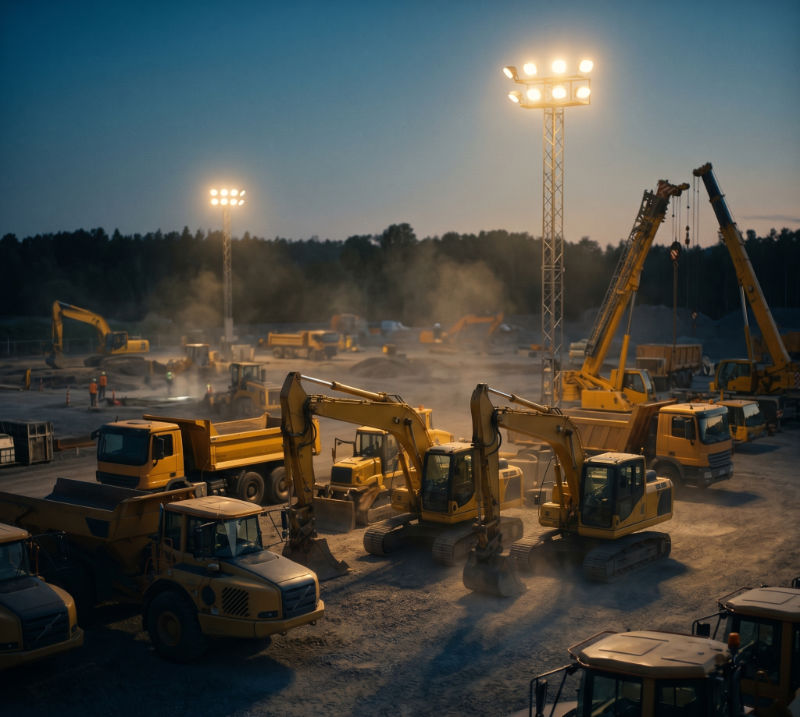
Construction equipment is the obvious one: excavators, bulldozers, loaders, cranes, concrete mixers, compactors and other heavy machinery. You track it to prevent theft, to see utilisation, and to schedule maintenance on runtime across multiple sites.
Shipping containers come next, including ISO containers, reefer (refrigerated) containers, portable cabins and storage units. Here you'd add door open/close sensors and environmental monitoring for temperature and humidity, so you know the cargo is intact. See container tracking and, for cold cargo, cold chain tracking.
Rental equipment covers generators, air compressors, welding machines, power tools, scaffolding and the rest of a rental fleet's inventory. Tracking automates on-hire billing, stops unauthorised use and helps you get overdue items back.
Industrial machinery means forklifts, material-handling equipment, factory machines and production assets. The reasons here are utilisation, finding things inside large facilities, and protecting expensive tooling from theft.
Then there are trailers, gensets and mobile plant: unpowered trailers, mobile generators, light towers and bowsers that shuttle between sites and get 'borrowed' or simply lost.
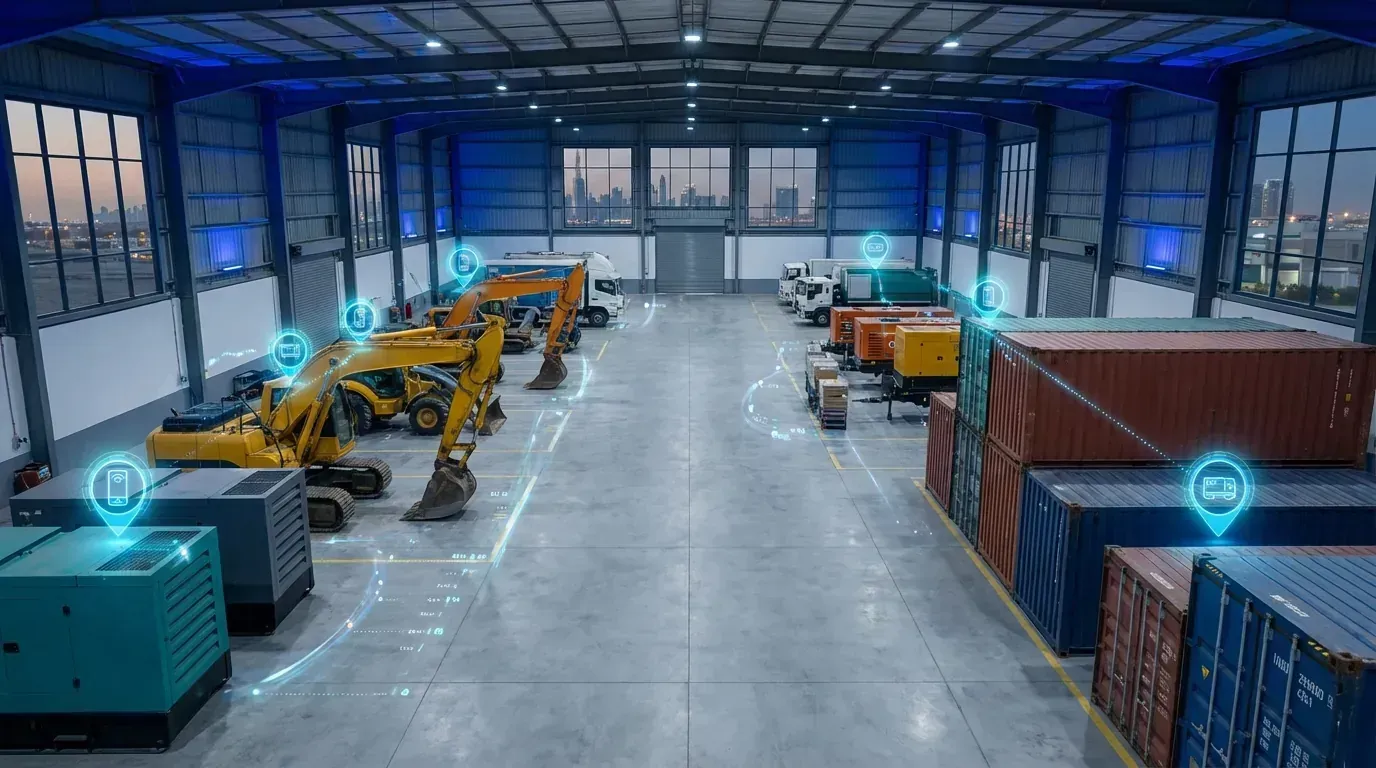
What these have in common is simple. Each one is expensive, it moves, and right now you probably can't see it. A tracker puts it on a live map. IOTee's asset tracking platform handles all of these on one dashboard.
How Asset Tracking Works: The Technology
GPS, Cellular, Batteries, and Sensors
There are four working parts to an asset tracking system.
The tracker itself is a rugged GPS device fixed to the asset or hidden on it. It can be hardwired (for powered assets like generators and machinery), run on a long-life battery (containers, trailers, scaffolding), or be solar-assisted for permanent outdoor assets. Units built for the UAE are sealed against heat and dust.
Then there's connectivity. The tracker sends its data over cellular (4G/LTE-M). Assets sit on remote desert sites, at ports and in yards where one carrier may have no signal at all, so you want dual-network coverage. IOTee's M2M SIM cards fail over between Etisalat and du so an asset never goes dark.
Sensors are optional, but they're where a lot of the value is. Door open/close, temperature and humidity, motion and tilt for tamper detection, and runtime or engine hours. With them, "where is it?" becomes "where is it, is anyone using it, is the cargo okay, and is somebody messing with it?"
Last comes the platform: a cloud dashboard and mobile app showing every asset on a map. You get geofencing (an alert when an asset leaves a site or yard), movement and theft alerts, utilisation reports and maintenance scheduling. Role-based access means site managers, finance and the rental desk each see what they need.
For high-value assets, the feature that earns its keep is a geofence combined with a motion alert. Draw a boundary round the site. If an idle asset crosses it when it shouldn't, you get an alert with its live location straight away, usually long before anyone on site notices it's missing.
The Business Case: What Asset Tracking Saves UAE Operations
Where the Money Comes Back
Asset tracking pays for itself in four ways, and you can put an AED number on each.
Start with theft. Idle plant on an open site is an easy target, and one recovered excavator (AED 300,000+) pays for tracking a whole yard for years. With an instant movement alert and a live location, what would have been a total loss becomes a quick recovery with the police.
Utilisation is often where the biggest saving hides. Most fleets find that 20-40% of their equipment is idle at any given time, while they're renting in more. Once you can see which assets are sitting unused, you redeploy them instead of hiring. You also learn how big a fleet you actually need.
For rental businesses, runtime-hour and on-hire tracking automates billing, catches equipment used past its contract terms and flags unauthorised use. That's revenue you were losing without knowing it. See equipment and logistics tracking.
The fourth lever is maintenance. Service machinery on actual engine hours instead of guesswork and it lasts longer, with fewer breakdowns that stall a whole site. It's the same saving we cover in the construction fleet & heavy equipment tracking guide.
Then there are the smaller wins: no more manual asset audits, lower insurance exposure, and an accurate asset register when the auditors come. Put it all together and payback on asset tracking is usually counted in months. If your fleet has had even one high-value loss, it'll come quicker still.
Asset Tracking by Industry in the UAE
Who Uses It and How
Construction and building is where asset tracking makes the most sense. You're following heavy machinery, equipment and tools across several sites in Dubai, Abu Dhabi and further out. Open sites, lots of subcontractors and expensive plant standing idle make it the highest-theft, lowest-visibility setting there is. A construction firm running without tracking is taking a chance.
In logistics and shipping, you're watching containers, trailers and cargo from Jebel Ali Port through to final delivery. Door sensors confirm the cargo hasn't been touched and geofences flag any container that leaves the yard. It sits naturally alongside container tracking and logistics tracking.
Manufacturers track forklifts, material-handling machinery and valuable production assets, mostly for utilisation and loss prevention in and around big facilities.
Oil and gas needs equipment watched in remote spots and harsh desert. That means rugged, sealed trackers and dual-network connectivity that keeps working on sites with poor signal.
Government and public sector teams manage public-works machinery, emergency equipment and municipal assets, and they need audit-ready registers and utilisation reports. This complements fleet management for their powered vehicles.
Equipment rental is the use case with the fastest, clearest payback. You manage rental inventory, track what's on hire, automate billing and stop unauthorised use or theft.
In practice most UAE operations run a mix of powered machinery, unpowered containers and trailers, and small expensive tools. You can put all of it on one asset tracking dashboard.
Never Lose Track of Equipment Again
GPS trackers for containers, generators, trailers and machinery. Up to 5-year battery life, with coverage across the UAE.
Powered vs Non-Powered Assets: Choosing the Right Tracker
Match the Tracker to the Asset
Which device you need comes down to two questions. Does the asset have power, and how often does it move?
- Hardwired trackers suit powered assets like generators, machinery and forklifts. They're wired into the asset's electrics, always on, can report engine or runtime hours and can support remote disable. Diesel gensets usually justify going a step further into full generator monitoring, with fuel level and fault codes on top of location.
- Long-life battery trackers are for unpowered assets such as containers, trailers, scaffolding and idle plant. They get multi-year battery life by reporting on a schedule and waking on motion, and they do most of the heavy lifting in asset tracking.
- Solar-assisted trackers fit permanent outdoor assets that need frequent updates without any wiring.
- Portable or magnetic trackers cover temporary, covert or movable jobs. They attach in seconds with no install. See portable GPS tracking.
With battery units you're always trading reporting frequency against battery life. More updates, flatter battery. The setting that works is infrequent scheduled pings while the asset sits still, then live tracking the moment it moves. You get years out of the battery and full visibility at the moment it counts.
UAE-Specific Requirements for Asset Tracking
Why Generic Asset Trackers Fail in the UAE
UAE conditions are hard on hardware that wasn't built for them. Insist on the following.
- Heat tolerance. Assets sit in 50°C ambient heat, and metal surfaces get far hotter. Look for a -20°C to +85°C rating, or expect units to fail and batteries to degrade within one summer.
- Dust and water sealing to IP67/IP68. Fine UAE dust kills unsealed units on open sites and in yards within months.
- Dual-network connectivity. Remote desert sites, oil and gas locations and busy ports all have dead zones, and Etisalat + du failover keeps assets visible everywhere.
- Battery life measured at UAE temperatures. A "5-year battery" rated at 20°C may last far less at 45°C, so ask for life expectancy at high ambient temperature instead of lab figures.
- Tamper resistance. Thieves rip trackers off or shield them. Motion and tilt alerts and concealed mounting both matter.
- Cross-emirate and cross-border awareness, with geofences that alert when an asset nears an emirate or national boundary. That's important for expensive plant and containers.
A tracker can demo beautifully in an air-conditioned office and still die on a Mussafah yard in August. These points decide whether it protects a million-dirham asset for five years in the field.
How to Choose an Asset Tracking Solution (Checklist)
What to Verify Before You Buy
Use this checklist when you compare asset tracking providers in the UAE:
- Battery life quoted at UAE temperatures, with no lab-ideal numbers
- IP67/IP68 sealing and a -20°C to +85°C rating for heat and dust
- A dual-network SIM with Etisalat + du failover for remote sites and ports
- The sensors you actually need: door, temperature/humidity, motion/tilt, runtime hours
- Smart reporting logic (scheduled while idle, live on motion) to protect the battery
- A multi-site, multi-asset dashboard with geofencing and instant theft alerts
- Rental billing and utilisation reports if you hire equipment out
- Integration with your ERP, maintenance or accounting systems
- No vendor lock-in: you own your data and can export it in standard formats
- Local UAE installation and support, with field service across the emirates instead of a remote-only setup
If a solution fails any of the first three (battery life, sealing, dual-network), it isn't fit for UAE field conditions, whatever it costs. For a wider view of GPS hardware tiers and pricing, read the GPS tracking systems buyer's guide.
Related reading: how GPS tracking for vehicles works in the UAE, including device types, pricing from AED 500/year and coverage across all seven emirates.
Frequently Asked Questions: Asset Tracking UAE
What is the difference between asset tracking and vehicle tracking?
Vehicle tracking follows powered vehicles, the cars and trucks that run regularly and power the tracker while they drive, so you get continuous live updates. Asset tracking is built for valuable things that often have no power and may sit still for weeks in remote or low-signal places: containers, generators, excavators, trailers, machinery. That's why asset trackers use long-life batteries, report on a schedule, switch to live updates when they detect motion, and often carry sensors for door, temperature, tamper and runtime hours. One watches how your fleet drives. The other watches where everything you own is, whether it's in use, and whether it's safe.
How long does an asset tracker battery last?
Most battery asset trackers last between one and five years, and reporting frequency decides where in that range yours lands. A unit that reports once or twice a day and only wakes on motion can go for years. Set it to frequent live updates and it'll run down much sooner. UAE heat shortens battery life too, so ask for the expected life at high ambient temperature (around 45°C) instead of lab figures. Powered assets like generators and machinery can use hardwired trackers that never need a battery change.
Can asset trackers work in remote desert sites and at ports?
Yes, as long as the hardware and connectivity are right. Remote UAE sites, oil and gas locations and congested ports all have cellular dead zones, so asset trackers need dual-network SIMs that fail over between Etisalat and du. Where there's no signal at all, the tracker stores its last known position and sends it as soon as it reconnects. For desert and yard conditions you'll also want rugged IP67/IP68 enclosures rated for high heat and dust.
How does asset tracking help equipment rental companies?
Rental businesses get runtime-hour and on-hire data from it. That automates billing, flags equipment run beyond its contracted hours, and picks up unauthorised use or movement outside the agreed site. It also finds overdue or "lost" rental items so you can recover them quickly, shows which inventory is earning and which is idle, and plugs revenue leaks you'd normally never see. For most rental operations it's the asset tracking use case with the fastest and clearest return on investment.
Can I monitor container temperature and door openings?
Yes. Container and reefer trackers can carry door open/close sensors that alert you the moment a container is opened, plus environmental sensors for temperature and humidity. That matters most for refrigerated (reefer) containers and sensitive cargo, where a temperature excursion or an unexpected door opening points to spoilage or tampering. IOTee covers this with its container tracking and cold chain tracking solutions.
How much does asset tracking cost in the UAE?
At typical 2026 UAE prices, battery asset trackers run around AED 250-700 per unit as a one-time cost, and hardwired trackers AED 300-800 plus installation. Container and reefer units with door and environmental sensors cost more. Connectivity and the platform subscription come to roughly AED 25-70 per asset per month. It's lower for low-frequency battery assets and higher for assets that need frequent updates or environmental sensors. Since one recovered or redeployed high-value asset can cover tracking for a whole yard, most operations see payback within months.
Next Steps: Get Visibility Over Every Asset
From Blind Spots to a Live Map
Asset tracking takes the things you can't currently see (idle plant, containers in a yard, generators on remote sites, rental kit out on hire) and puts them on a live map that can alert you. What you get back is concrete: less theft, recovered equipment, better utilisation, rental revenue billed automatically, and maintenance driven by actual use.
If you're starting out, do it in three steps.
First, list your high-value and mobile assets. Write down everything worth tracking and where it currently drops out of sight. That list is your business case.
Second, match a tracker type to each asset: hardwired for powered machinery, long-life battery for containers and trailers, portable for temporary or covert jobs.
Third, run a pilot. Track a representative group of assets for 60-90 days, measure the utilisation you win back and the losses you prevent, then roll out across sites with the numbers in hand.
IOTee deploys asset tracking across the UAE in construction, logistics, manufacturing, oil and gas, government and equipment rental. Deployments range from a handful of expensive machines to thousands of containers and tools on one dashboard. Start with the asset tracking platform, add container or cold chain sensors where you need them, and connect it all over resilient M2M SIM coverage. Anything you own that you can't see is quietly at risk.