Why Speed Limiters Are Mandatory — Not Optional — in the UAE
A speed limiter (or speed governor) is compulsory in the UAE for large groups of commercial vehicles. The Roads & Transport Authority (RTA) and the UAE Ministry of Interior, which made limiters mandatory on buses and trucks, enforce the requirement, and it's checked every year at the Mulkiya (vehicle registration) inspection. If a truck or bus should have a calibrated, certified limiter and doesn't, it fails inspection and can't renew its registration. The operator also faces fines of up to AED 10,000, black points and suspension of the vehicle.
The reasoning is easy to follow. A heavy truck at high speed is far more dangerous than a car: it takes longer to stop, carries much more mass, and the results of a crash are catastrophic. UAE highways carry huge volumes of freight and passenger traffic, and heavy vehicles going too fast caused a disproportionate share of serious road deaths. Capping the top speed these vehicles can physically reach, mechanically and electronically, is about as effective as any single safety measure gets. That's why the UAE made it compulsory, in line with GSO (GCC Standardization Organization) standards.
This 2026 guide is for fleet owners, transport managers, owner-drivers and compliance officers responsible for commercial vehicles in Dubai, Abu Dhabi, Sharjah or any other emirate. It covers which vehicles have to be fitted, the speed caps for each class, how the two device types (ESL and FSL) differ, how installation and certification work, and what happens if you don't comply. It also shows how a modern GPS-connected limiter turns a compliance cost into savings you can measure in safety, fuel and insurance. For the service itself, see IOTee's RTA-compliant speed limiter solution.
What Is a Speed Limiter (Speed Governor)?
How the Device Actually Controls Vehicle Speed
Not sure whether your vehicles are covered? Check in seconds with our free UAE GPS Compliance Checker. It covers speed limiter mandates as well.
A speed limiter stops a vehicle going faster than a pre-set top speed, however hard the driver presses the accelerator. People in the UAE also call it a speed governor, and the two names mean the same thing.
A speedometer only shows your speed, and the driver can cancel cruise control in an instant. A certified limiter is different: it enforces a hard ceiling. Once the vehicle reaches the legal cap, say 80 km/h for a heavy truck, the limiter cuts back fuel or throttle so the vehicle can't go any faster, even downhill with the pedal flat to the floor.
How it does that depends on the engine:
- Electronic throttle control: on modern vehicles with a drive-by-wire (electronic) throttle, the limiter talks to the engine control unit (ECU) and caps speed precisely and smoothly
- Fuel-delivery control: on older diesel vehicles with mechanical fuel injection, the limiter regulates the fuel going to the injection pump, which restricts how much reaches the engine above the set speed
A properly fitted limiter is sealed and hard to tamper with. The calibration is locked, and any attempt to disconnect or bypass it leaves evidence. On a GPS-connected system, every tamper attempt or over-speed event is also logged and alerted in real time. That's what separates a device that gets you through inspection from one that keeps your drivers at a safe speed every single day.
UAE Speed Limiter Law: Who Must Fit One and at What Speed (2026)
Mandatory Vehicle Categories and Their Speed Caps
The UAE rules are set by vehicle class. The exact wording and enforcement vary a little between emirates, but the core framework is the same across the country. The Ministry of Interior sets it, in line with GSO standards, and RTA and the other emirates' transport authorities apply it.
Heavy trucks over 3.5 tonnes: 80 km/h. Every goods vehicle and truck with a gross weight above 3.5 tonnes must have a limiter set to no more than 80 km/h. This is the biggest group affected, and it covers most of the UAE's freight and logistics fleet.
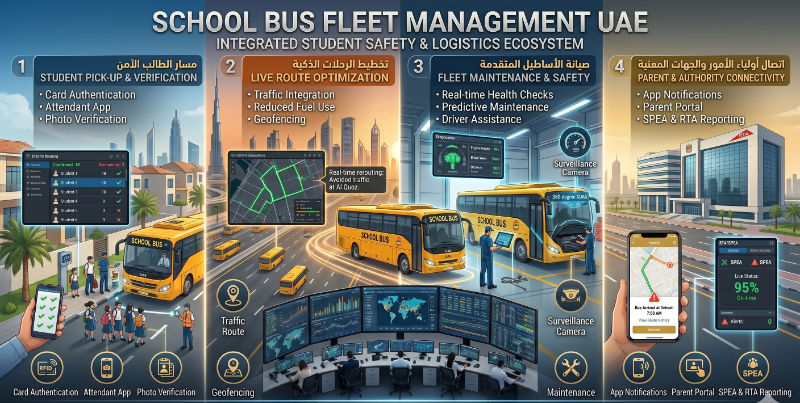
Buses and school buses: 80 km/h. Large buses, including every school bus, are limited to 80 km/h. For school transport the limiter is one part of a wider set of required technology, which our school bus fleet management and RTA compliance guide covers in full.
Minibuses with 22 seats or fewer: 100 km/h. Smaller passenger vehicles like these are usually limited to 100 km/h, because they're lighter and the risk is different.
Other commercial and specialist vehicles also need limiters: tankers, hazardous-goods carriers, heavy equipment transporters and some others, sometimes with a lower cap depending on the cargo and route. If you run any of these, confirm the exact cap with your emirate's authority.
The limiter doesn't replace the posted speed limit or the limit for that class of road. Drivers still have to obey both. The cap is the most the vehicle can do, and it doesn't make 80 km/h acceptable everywhere. A GPS-connected limiter can also apply lower speed limits in specific zones on top of the hard cap, such as inside a depot, a school zone or a residential area, using geofencing.
Penalties: Fines, Black Points, and Mulkiya Failure
Breaking the speed limiter rules hurts you in several ways at once, and they add up:
- Fines of up to AED 10,000 for running a vehicle that should have a certified limiter and doesn't, or whose limiter has been tampered with, disconnected or allowed to lapse
- Black points and suspension of the vehicle, which can come on top of the fine depending on the violation and the emirate
- A failed Mulkiya renewal, because the limiter certificate is checked at the annual inspection. With no valid certificate the vehicle fails, can't be re-registered, and can't legally be driven on UAE roads
- Insurance and liability problems: after a serious incident involving a missing or tampered limiter, your insurer may dispute or cut your cover, and your liability goes up sharply
- Commercial damage: for contractors bidding for logistics, government or school transport work, a clean compliance record is more and more often a condition of entry, and a limiter violation on file counts against you
So think of compliance as a certified status you keep up and renew every year. Fitting the device is only the start. Staying compliant costs very little next to a failed Mulkiya, a vehicle stuck off the road, an AED 10,000 fine or an insurance claim in dispute.
ESL vs FSL: Choosing the Right Speed Limiter Device
Electronic Speed Limiter (ESL) vs Fuel-Type Speed Limiter (FSL)
UAE-approved limiters come in two main types. Which one you need depends on the vehicle's engine and throttle, so it isn't really a choice.
The Electronic Speed Limiter (ESL) is for modern vehicles with electronic, drive-by-wire throttles. It connects straight to the engine control unit and caps speed electronically. What it offers:
• Precise, smooth speed capping with no mechanical lag
• Cleaner integration with GPS and telematics platforms
• Easier diagnostics and tamper detection
• Fits most trucks, buses and commercial vehicles built in the last decade
The Fuel-Type Speed Limiter (FSL) is for older diesel vehicles with mechanical fuel injection. These have no electronic throttle for an ESL to talk to, so the FSL controls speed by regulating the fuel reaching the injection pump. What it offers:
• Works on older mechanical-injection engines that an ESL can't serve
• A tough, proven mechanism for older fleet vehicles
• Brings older vehicles into full RTA compliance without an engine upgrade
The installer works out the right device from the vehicle's make, model, year and engine type. If your fleet mixes new and old vehicles, you'll usually need some of each. Fitted by an approved provider, both types give you the same legal result, a certified speed cap that passes Mulkiya, and both can be connected to GPS so you can see the whole fleet. IOTee installs and certifies both ESL and FSL devices and matches the right unit to each vehicle.
Installation, Calibration, and Annual Certification
From Fitment to Certificate — the Compliance Process
Getting a vehicle compliant follows a set process. The certificate you get at the end is what the RTA inspection actually looks at.
First, the installer picks the device. They look at the make, model, year and engine type, and choose the right ESL or FSL unit.
Then comes the installation. The limiter is fitted and wired into the throttle or ECU (for an ESL) or the fuel system (for an FSL). If you're going GPS-connected, the tracking unit and M2M SIM connectivity go in at the same time, so speed events reach your fleet platform from the first day.
Third is calibration. The device is set to the exact legal cap for the vehicle's class: 80 km/h for trucks and buses, 100 km/h for minibuses, or whatever cap applies. Calibration has to allow for tyre size and final drive ratio, otherwise the enforced speed won't be accurate.
Fourth, a road test confirms the cap works correctly and smoothly in normal driving.
Fifth, sealing and certification. The calibration is sealed against tampering and you're issued an RTA-compliant Speed Limiter Certificate. That's the document you show at the Mulkiya inspection.
The sixth step, the annual renewal, is where fleets slip up. The certificate isn't permanent. You have to renew it every year to keep the registration valid, and if you miss it, the vehicle fails its next inspection. With dozens or hundreds of vehicles, tracking each certificate's expiry by hand is a common point of failure. A platform that holds the renewal dates and warns you before they expire takes that risk away. IOTee's speed limiter service includes certificate renewal management, so no vehicle drops out of compliance without anyone noticing.
Beyond Compliance: The GPS-Integrated Speed Limiter
Turning a Legal Requirement Into a Fleet Advantage
A limiter on its own keeps you legal. Connect it to GPS and the same hardware becomes a live tool for managing your fleet and keeping it safe. That's the point where the money you spent on compliance starts coming back.
Connect the limiter to a real-time GPS tracking platform and you get:
- Tamper detection and alerts: any attempt to bypass, disconnect or recalibrate the limiter is flagged straight away, so you don't find out months later at inspection or after a crash
- Speed verification: the platform keeps comparing the vehicle's actual GPS speed with the limiter's set point, catching drift or a failing unit before it turns into a violation
- Speed rules by zone: with geofencing you can set lower limits inside depots, school zones, residential areas or customer sites, on top of the legal cap
- Speeding reports: every over-speed event is logged with the time, place, driver and severity, and flows straight into driver behaviour monitoring and coaching
- Certificate and compliance tracking: renewal dates, certificate status and inspection readiness for the whole fleet sit in one place, so audits and Mulkiya renewals stop being a last-minute rush
- Fuel and maintenance savings: a capped top speed and smoother driving burn less fuel and cause less wear, and with fuel tracking you can measure exactly how much
The limiter stops being a box that gets the truck through inspection. It becomes part of how you run safety, costs and insurance. For how that fits into the wider operation, see our Fleet Management UAE complete 2026 guide.
Stay RTA-Compliant — Avoid Fines up to AED 10,000
Certified speed limiter supply and installation for trucks, buses and school transport across the UAE.
Common Speed Limiter Compliance Gaps
Where Operators Actually Get Caught Out
Across UAE commercial fleets, the same five gaps cause most speed limiter violations and failed inspections.
The most common is a lapsed certificate. The limiter is fitted and working fine, but nobody renewed the annual certificate, and the vehicle fails its next Mulkiya. You fix this with central tracking of expiry dates and early alerts. A spreadsheet somebody forgets to open won't do it.
Next comes tampering. A driver who's determined to go faster disconnects or defeats the limiter. Without telematic checks, this can go unnoticed for months. A GPS-connected limiter with tamper alerts and speed checks catches it the first time.
Third, calibration drift. New tyres, mechanical wear or a badly calibrated unit can let the enforced speed wander away from the legal cap. Constantly comparing actual GPS speed with the set point shows you the drift before the inspector does.
Fourth, the wrong device for the vehicle. Put an ESL on an engine that needs an FSL, or the other way round, and you end up with an installation that either doesn't work properly or can't be certified. An approved installer who picks the device correctly prevents this from the start.
Fifth, a limiter that's fitted but not connected. A standalone unit passes inspection and tells you nothing: no tamper alerts, no violation logs, no certificate tracking. The hardware sits in the vehicle and you learn nothing from it. Connecting it is what turns a compulsory expense into something useful.
Treat the limiter as a connected, managed part of the vehicle and you'll avoid all five of these gaps without having to think about it.
Cost and ROI of Speed Limiter Compliance
What Speed Limiter Compliance Costs in the UAE (2026)
Speed limiter costs in the UAE come in three parts: the device and installation (paid once), the annual certificate renewal, and, if you go for a connected setup, a small monthly platform fee per vehicle.
- ESL device and installation (one-time): covers the unit, fitting, calibration to the legal cap, road test and the first year's certificate. Typical for modern electronic-throttle vehicles
- FSL device and installation (one-time): covers fitting, calibration and the first year's certificate for older mechanical-injection vehicles. Usually in a similar range to ESL, depending on the vehicle
- Annual certificate renewal (recurring): the compulsory yearly renewal you need to pass Mulkiya and keep operating legally. A modest cost per vehicle per year
- Monthly platform fee (optional, per vehicle): adds GPS tracking, zone-based speed control, tamper alerts, certificate management and full fleet platform integration on top of the limiter itself
For current prices per vehicle and per device type, ask IOTee's speed limiter service for a quote. The figure depends on the vehicle type, the size of your fleet and whether you take the connected platform.
The obvious return is avoiding the AED 10,000 fine and the cost of a vehicle stuck off the road after a failed inspection. A GPS-connected limiter also saves you money every month after that:
• Lower fuel use from a capped top speed and smoother driving, often a good percentage of fuel spend across a fleet
• Fewer accidents thanks to enforced speed and driver coaching, which means lower repair bills, less downtime and fewer insurance claims
• Lower insurance premiums where your insurer recognises documented speed control and driver scoring
• Less admin, because certificates and compliance are managed automatically
For most commercial fleets, the connected option pays for itself through fuel and insurance savings well inside the first year, and you're protected on compliance from the first day.
Choosing a Speed Limiter Provider in the UAE
The Vendor Checklist for UAE Fleets
Speed limiter providers vary a lot. Check each one against this list. If a provider fails on any single point, keep looking.
1. ✓ RTA-approved and GSO-compliant devices and certification, accepted at Mulkiya inspection in every emirate you operate in
2. ✓ Both ESL and FSL offered, with the right device chosen for each vehicle in a mixed fleet
3. ✓ Calibration and road test included, with proper sealing against tampering
4. ✓ Certificate renewal management, with the provider tracking expiry and warning you before each annual renewal
5. ✓ GPS integration available: tamper alerts, speed verification, zone-based speed rules and violation reporting
6. ✓ One fleet platform, so speed limiter data sits alongside tracking, driver behaviour and fuel data instead of in a separate silo
7. ✓ UAE-wide installation and support, with teams in Dubai, Abu Dhabi, Sharjah and the Northern Emirates
8. ✓ Transparent pricing, with clear one-time, renewal and monthly figures and no hidden costs
9. ✓ Fleet references: named UAE commercial fleet customers who've been with them for several years
10. ✓ Tamper and audit trail, with every speed event and certificate status available on demand for inspectors and insurers
IOTee meets all ten as standard. We install and certify RTA-compliant speed limiters and connect them to one fleet platform across all seven emirates.
Related: See how GPS tracking for vehicles works in the UAE, including device types, pricing from AED 500/year, and coverage across all seven emirates.
Frequently Asked Questions
Is a speed limiter mandatory for all vehicles in the UAE?
No. Speed limiters are compulsory for certain classes of commercial vehicle, and private passenger cars aren't one of them. The rule covers heavy trucks over 3.5 tonnes (capped at 80 km/h), buses and school buses (80 km/h), minibuses with 22 seats or fewer (usually 100 km/h), and some specialist vehicles such as tankers and hazardous-goods carriers. The UAE Ministry of Interior sets the requirement, and the RTA and the other emirates' transport authorities enforce it in line with GSO standards. If you run any of these vehicles, a certified limiter is a legal requirement and it's checked at the Mulkiya inspection.
What is the speed limit set on a UAE truck speed limiter?
In the UAE, heavy trucks over 3.5 tonnes are limited to 80 km/h. Buses, including school buses, are capped at 80 km/h as well, and minibuses with 22 seats or fewer are usually limited to 100 km/h. The limiter enforces this as a hard ceiling, so the vehicle physically can't go faster however hard the driver presses the pedal. Drivers still have to obey the posted limit, which may be lower. The cap is the most the vehicle can do, and drivers shouldn't treat it as a target.
What is the difference between an ESL and an FSL speed limiter?
An ESL (Electronic Speed Limiter) is for modern vehicles with electronic throttle control. It connects to the engine control unit and caps speed electronically. An FSL (Fuel-Type Speed Limiter) is for older diesel vehicles with mechanical fuel injection and no electronic throttle. It controls speed by regulating fuel delivery to the injection pump. The vehicle's engine and throttle decide which one you need, so there's no real choice to make. A fleet with a mix of newer and older vehicles will usually need both. Installed and certified properly, either one gives the same legal result and passes Mulkiya inspection.
How often do I need to renew my speed limiter certificate?
You have to renew the RTA-compliant Speed Limiter Certificate every year. It's checked at the annual Mulkiya (vehicle registration) inspection, and without a valid, current certificate the vehicle fails, can't renew its registration and can't legally be driven. Tracking each vehicle's expiry date by hand is where fleets often slip up. A provider that manages renewal dates and warns you in advance, as IOTee's speed limiter service does, takes away the risk of a vehicle quietly dropping out of compliance.
What is the fine for not having a speed limiter in the UAE?
Running a vehicle without the certified limiter it needs, or with one that's been tampered with, disconnected or allowed to lapse, can bring a fine of up to AED 10,000, plus possible black points and suspension of the vehicle. On top of the fine, the vehicle will fail its Mulkiya inspection and can't be registered, and after a serious incident your insurer may dispute your cover. Add it all up and non-compliance costs far more than fitting the right limiter and renewing its certificate each year.
Can a speed limiter be tampered with or bypassed?
A properly fitted limiter is sealed and hard to tamper with, but a determined driver can still get at a standalone unit, and you might not find out until the inspection or until after a crash. That's the biggest advantage of a GPS-connected limiter. The platform keeps comparing the vehicle's actual speed with the limiter's set point and flags any tampering, bypass or calibration drift in real time. Tampering is also a violation in its own right, with its own fines and penalties. Connecting the limiter to a tracking platform is the most reliable way to know it's working every day of the year, and on inspection day too.
Does a speed limiter help with anything besides legal compliance?
Yes, by a good margin, if it's connected to GPS. As well as getting you through inspection, a connected limiter cuts fuel use (a capped top speed and smoother driving burn less), reduces how often accidents happen and how bad they are (enforced speed plus driver coaching), can lower your insurance premium where the insurer recognises documented speed control, and reduces admin through automatic certificate and compliance tracking. It also lets you set lower speed limits by zone, in depots, school zones or customer sites, on top of the legal cap. For most fleets these savings pay for the connected option within the first year.
Does IOTee install and certify speed limiters across the UAE?
Yes. IOTee installs, calibrates and certifies RTA-compliant speed limiters, both ESL and FSL, for commercial vehicles in all seven emirates, including Dubai, Abu Dhabi and Sharjah. Every installation includes calibration to the legal cap, a road test, tamper-proof sealing and the RTA-compliant certificate you need for Mulkiya. IOTee also manages your annual certificate renewals and can connect the limiters to its GPS tracking and fleet management platform, which adds tamper alerts, speed control by zone, violation reports and central compliance tracking. See the speed limiter service page to request a quote.
The Bottom Line for UAE Fleet Operators
What to Do This Week
The speed limiter rules are among the clearest and most strictly enforced in UAE commercial transport, and once you understand them they're among the easiest to get right. The vehicle classes are defined, the caps are fixed, the device type follows from the engine, and you renew the certificate once a year. Miss any of those and the vehicle fails Mulkiya and you risk an AED 10,000 fine. Get them right and the same hardware can bring down your fuel, accident and insurance costs.
We'd suggest three things to do now.
First, check every commercial vehicle you run against the rules. List the ones that fall into the covered classes (trucks over 3.5 tonnes, buses, minibuses, specialist vehicles) and confirm each has a certified limiter with an in-date certificate. Any vehicle without one is a liability right now.
Second, look at your certificate expiry dates today. A working limiter with an expired certificate still fails inspection. If you're tracking renewals on a spreadsheet, move to a managed system that warns you before each one runs out.
Third, decide whether to connect your limiters to GPS. A standalone limiter gets you through inspection. A connected one gets you through inspection and pays you back in fuel, safety and insurance. Once you have more than a handful of vehicles, connecting them gives the better return.
IOTee installs and certifies RTA-compliant speed limiters and connects them to one fleet platform across the UAE. We usually start with a compliance audit of your fleet to find which vehicles need a limiter, which certificates are coming due, and where connecting to GPS will pay back fastest. That way your fleet stays compliant and gets safer and cheaper to run at the same time. To get started, see the speed limiter solution or the Fleet Management UAE complete 2026 guide.